

If you ask most people what does a yacht broker do, you’ll likely hear a classic answer: “They sell boats to rich people.”
While that isn’t technically wrong, it’s a bit like saying a real estate agent “just sells houses.” It’s true on the surface, but it misses the mountain of work that happens behind the scenes.
At Little Yacht Sales, we know that a yacht isn’t just a car with a hull. It’s a complex, floating asset that can cost as much as a luxury home. It carries maritime law implications, potential foreign flagging issues, and hidden problems tucked away below the waterline.
Moving a vessel from one owner to another is a complicated dance. Our job as your professional yacht broker is to make sure that dance doesn’t end in a stumble.
The Elevator Pitch: What is a Yacht Broker?
In short, a boat broker is a licensed intermediary. We represent either the buyer or the seller: and sometimes both with full disclosure: to facilitate a safe transaction.
We handle everything from valuation and marketing to sea trials and escrow. We only earn a commission when the deal successfully closes. If the deal doesn’t happen, we don’t get paid. That keeps us highly motivated to get things right for you!
Why Sellers Hire a Yacht Broker
If you own a 42-foot cruiser and you’re ready to move on, you could try to list it yourself. People do it all the time. But a certified yacht broker turns that potential chaos into a smooth, managed process.
1. Getting the Price Right
Sellers often struggle with pricing. We’ve seen it a thousand times: a seller loves their boat and thinks it’s worth more than the market suggests.
We use proprietary “sold-price” databases that the public can’t see. These show us what boats actually sold for, not just what they were listed at. We help you price your boat to sell quickly so it doesn’t sit on the market growing “stale.”
2. Marketing the Dream
Marketing is more than just a quick cell phone photo. Our yacht broker services include professional photography and detailed, honest listings.
We place your vessel on major industry networks like YachtWorld. A private seller simply can’t reach that many eyes. We write copy that sells the adventure without overpromising, which prevents headaches later during the survey.
3. Screening for Serious Buyers
Anyone can say they want a yacht. Far fewer have the bank account to back it up. We separate the serious buyers from the “tire-kickers” and dreamers. This saves you from cleaning the boat for a dozen showings that were never going anywhere.
4. Managing the “Boat Emotions”
Let’s be real: selling a boat is personal. You’ve had family dinners on that deck and navigated storms in that cockpit.
When a buyer starts listing every flaw to your face, it can hurt! We act as a buffer. We keep negotiations focused on the numbers rather than turning them into a grudge match.
How a Yacht Broker Works for the Buyer
Now, let’s flip the script. If you’re looking to buy, a yacht broker for buyers is your best friend. Why? Because a boat is very good at hiding its flaws.
Finding the Perfect Match
We filter a massive, noisy market down to the boats that actually fit your life. A boat perfect for a weekend on Clear Lake is a terrible choice for crossing an ocean. We know the difference, and we’ll tell you the truth: even if it isn’t what you expected to hear.
If you are considering going it alone, check out our guide on How to Buy a Yacht Privately: A Step-by-Step Guide. You’ll quickly see how many moving parts there are!
Reading Between the Lines
Experienced brokers know which builders cut corners and which model years had “gremlins.” We can look at a listing and tell you exactly what it isn’t saying. If a price looks too good to be true, we usually know why.
Coordinating the “Big Day”: Survey and Sea Trial
This is the heart of the purchase. A sea trial is a test drive where we run the engines under load and check every system.
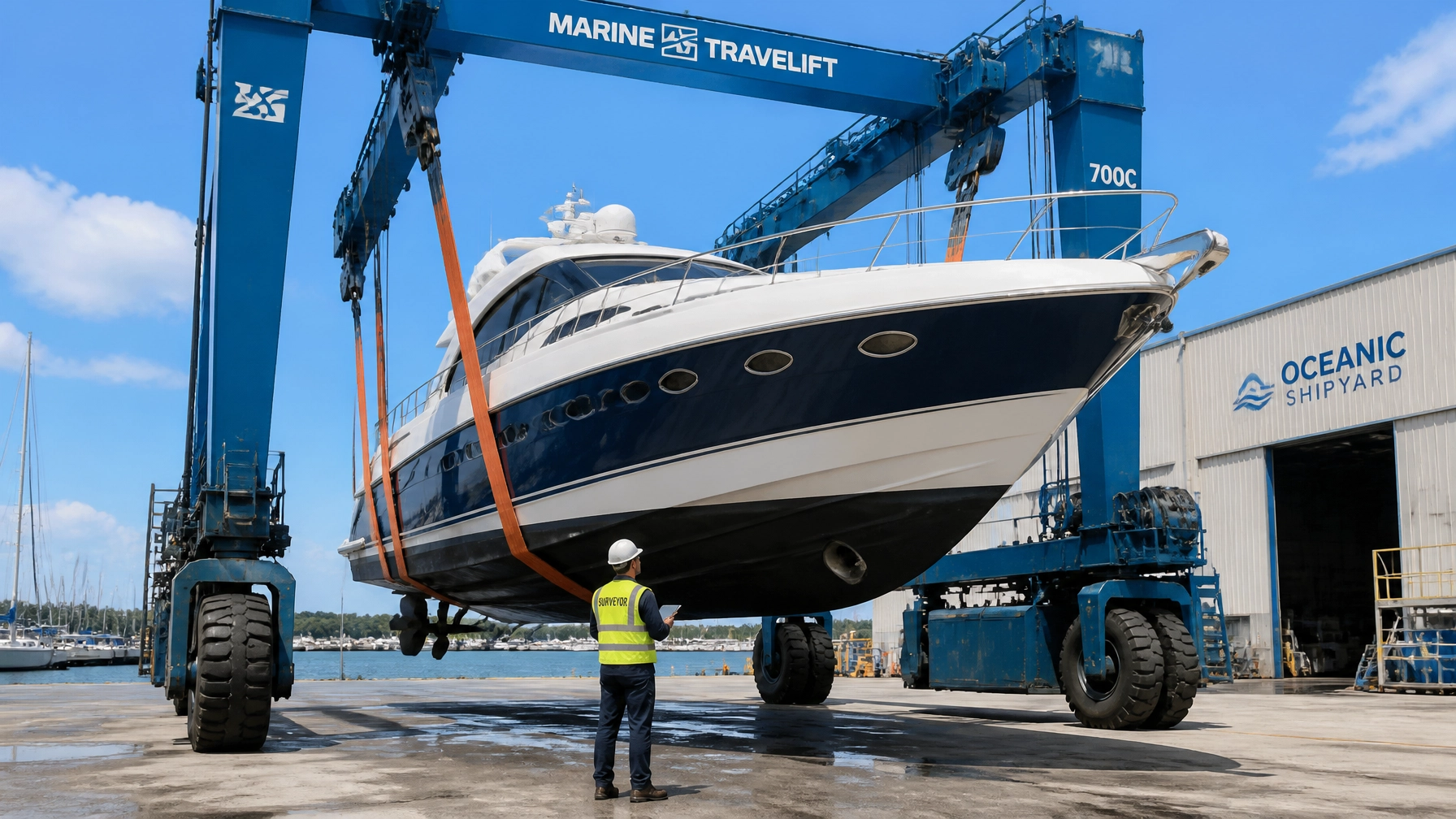
Then comes the marine survey. We always recommend hiring an independent surveyor to check the hull, electrical, and plumbing. For more on this, read our post: Do You Need a Marine Survey When Buying a Boat?. We handle the scheduling and the haul-out yard logistics so you don’t have to.
Negotiating with Facts
A survey almost always finds something. A sharp boat broker uses those findings to renegotiate the price or get the seller to fix issues. Often, the money we save you here is much more than any fee involved.
The “Boring” Part: Paperwork and Escrow
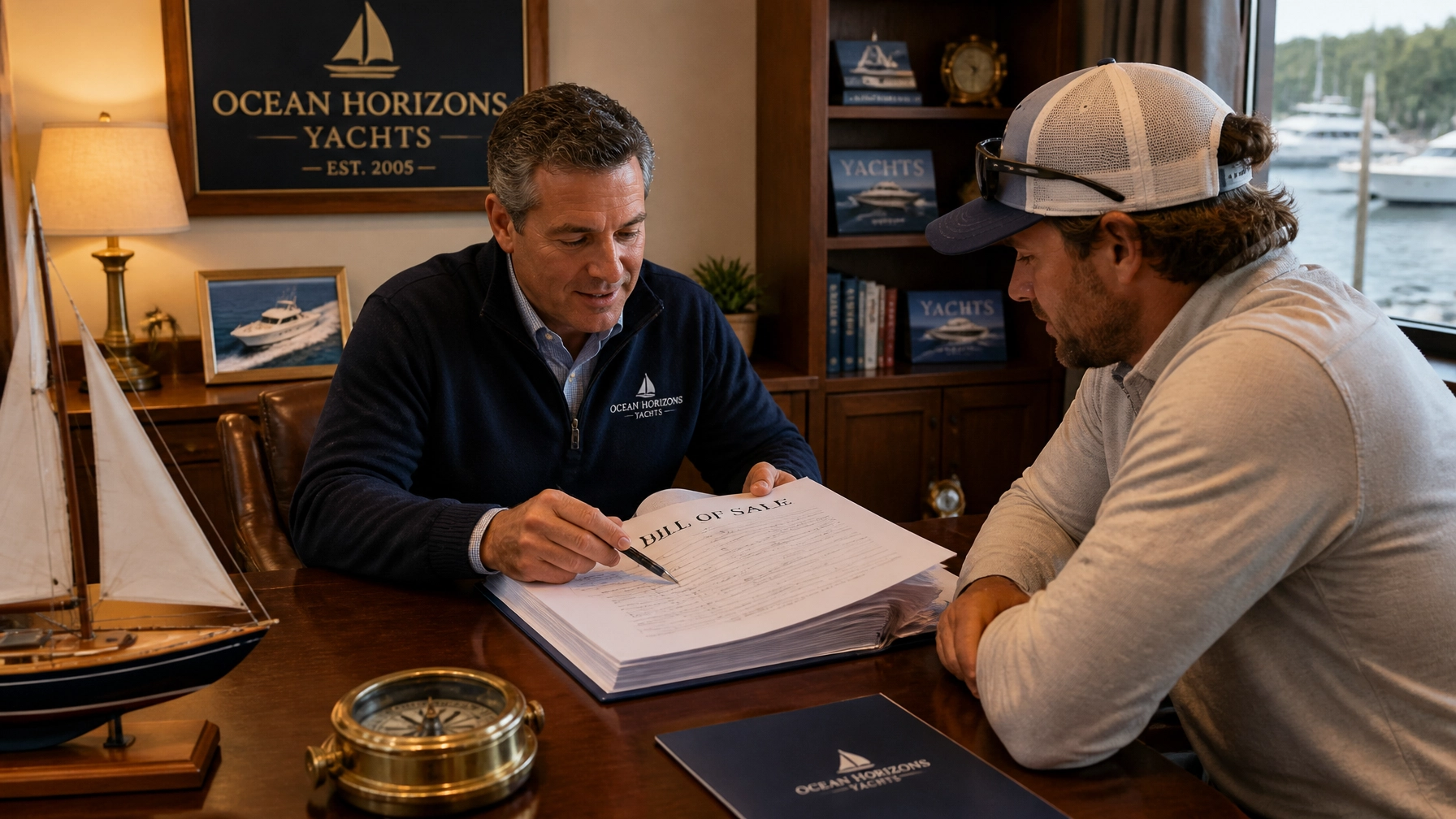
This is the part nobody sees, but it’s arguably the most important. Transferring a vessel is a legal and administrative slog.
A single deal can involve:
- Bills of Sale and Title Transfers.
- U.S. Coast Guard documentation.
- Lien searches to ensure the boat is owned “free and clear.”
- Complex sales tax and import duty calculations.
If you get this wrong, you might end up with a boat you can’t legally register. We coordinate with documentation specialists and attorneys to ensure every “i” is dotted. For a deeper dive into this stage, see The Boat Buying Process Part 3: Financing, Insurance, and the Final Handover.
How Does a Yacht Broker Get Paid?
We generally work on commission, which is typically paid by the seller. The standard rate is around 10% of the sale price. If there are two brokers involved (one for the buyer and one for the seller), they usually split that 10%.
This means that for a buyer, our services often cost you nothing directly! It’s one of the few times in life you get a professional advocate for free.
Credentials That Matter
Not all brokers are created equal. In states like Florida or California, licenses are required. In other places, it’s the Wild West. That’s why you should look for specific credentials.
We highly recommend looking for a Certified Professional Yacht Broker (CPYB). This designation requires years of experience and a rigorous exam. We also value membership in the International Yacht Brokers Association (IYBA), which ensures your broker follows a strict code of ethics and uses standardized contracts.
Do You Actually Need a Broker?
Not always! If you’re buying a small, inexpensive skiff from your neighbor, a handshake and a simple bill of sale might work.
However, you should definitely hire a yacht broker if:
- The boat is expensive or technically complex.
- The deal involves financing or an existing lien.
- The boat is crossing state or national borders.
- You simply don’t have the time to manage 50 phone calls a day.
Why Choose Little Yacht Sales?
At the end of the day, a great broker is part market analyst, part negotiator, and part guide. We want to keep your “adventure vehicle” purchase from going sideways.
If you’re ready to start your next chapter on the water, we’d love to help. You can learn more about why to buy your yacht from us or just contact our team to chat about your goals.
The water is waiting( let’s get you out there!)