
How to Buy a Yacht Privately: A Step-by-Step Guide
To buy a yacht privately, find the right boat, make a written offer subject to survey and sea trial, and place a deposit in a broker’s escrow account. After a satisfactory marine survey, you confirm clear title, complete the bill of sale and Coast Guard or state title transfer, release funds, insure the boat, and register it.
Most used yachts change hands in a private sale — meaning you buy from the current owner rather than from a dealer’s new-boat inventory. Done right, a private purchase is straightforward and safe; done casually, it exposes you to undisclosed damage, outstanding liens, and title problems. Below is the process our brokers walk buyers through every week, whether the boat sits a few slips away in Kemah or on the other side of the country.
1. Set your budget and get your financing in order
Decide what you can spend on the boat and on owning it. If you plan to finance, get pre-approved through a marine lender first — marine loans differ from auto or home loans in term and down payment. Knowing your number keeps your offer credible and your search focused.
2. Find the right boat
Search brokerage listings (sail) and brokerage listings (power), owner classifieds, and class associations for the make and model that fits how you’ll actually use the boat. Compare equipment, hours, and maintenance history, not just price. A good broker can surface listings — including other brokers’ listings — and tell you which boats are realistically priced for their condition.
3. Make a written offer
Buyers make offers on yachts in writing using a purchase and sale agreement, not a handshake. A typical offer includes:
- The offer price and a deposit — commonly around 10% — that the broker holds in a separate escrow account
- A contingency making the sale subject to a satisfactory marine survey and sea trial
- A contingency requiring clear, lien-free title
- A target closing date and a list of what equipment comes with the sale
Those contingencies protect you: they let you renegotiate or cancel and recover your deposit if the boat doesn’t check out.
4. Get a marine survey and sea trial
Hire an accredited marine surveyor — ideally one you choose, not one referred by the seller. The survey usually includes a haul-out so the surveyor can inspect the hull and running gear out of the water, plus a sea trial to test the engine, systems, and handling under way. You’ll receive a written report with findings and a fair market valuation, which lenders and insurers typically require.
5. Accept, renegotiate, or walk away
With the survey in hand, you have three choices: accept the boat as-is, ask the seller to fix issues or reduce the price, or reject the boat and have the survey contingency return your deposit. Most deals involve some renegotiation here — it’s a normal part of the process, not a sign the sale is falling apart.
6. Verify title and clear any liens
Before any money changes hands, confirm the seller actually owns the boat free of loans or maritime liens. This means checking the title or U.S. Coast Guard documentation and any outstanding security interests. Skipping this step is the single biggest risk in a private sale — an undisclosed lien can follow the boat to its new owner.
7. Close the sale and transfer ownership
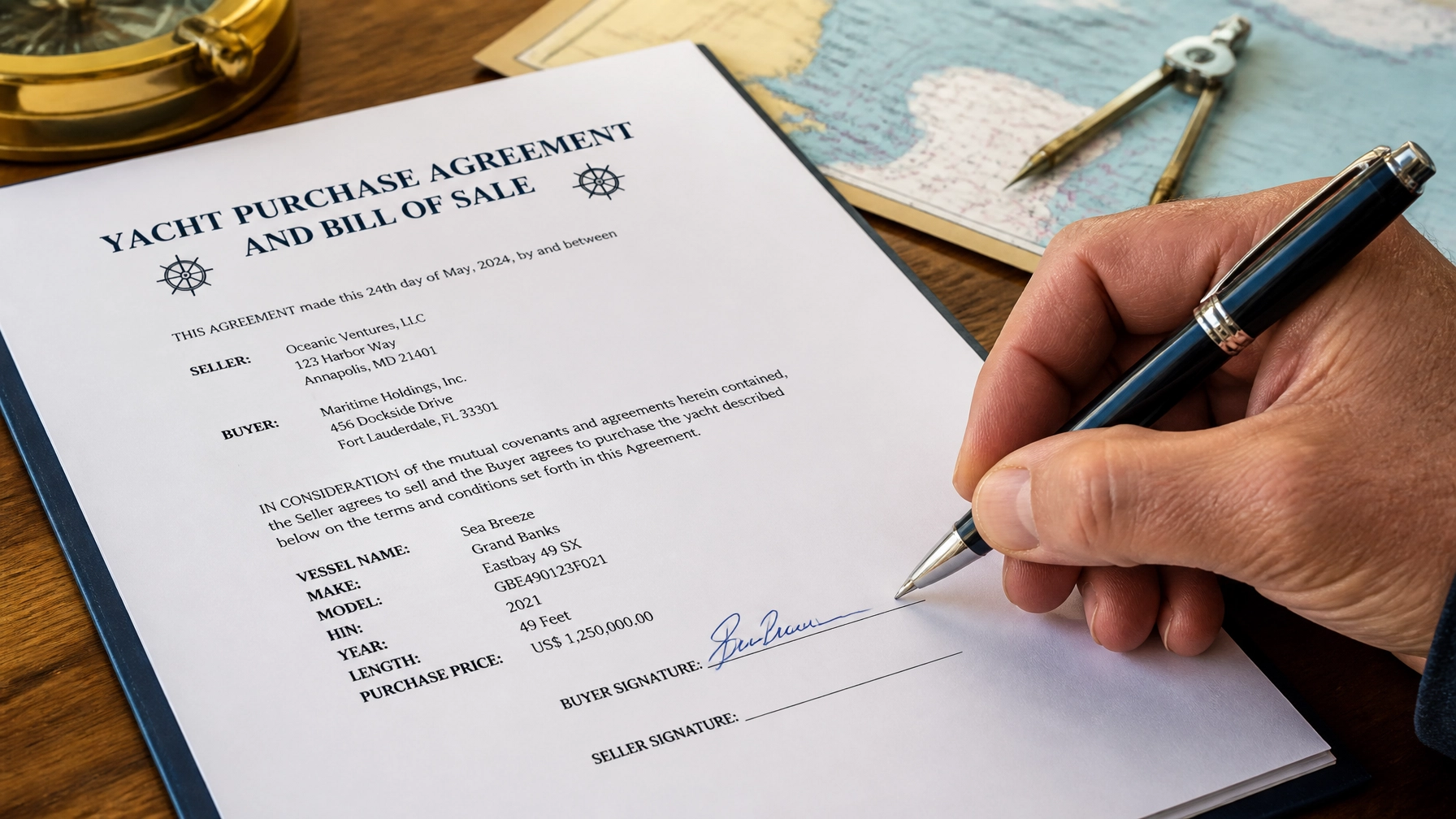
At closing, you complete a signed bill of sale and transfer ownership through either a state title transfer or, for larger documented vessels, the U.S. Coast Guard. Funds from escrow go to the seller once title clears. Keep copies of every signed document.
8. Register, document, and insure
In Texas, most vessels are titled and registered through Texas Parks & Wildlife, you’ll owe sales or use tax on the purchase and some larger yachts may instead be documented with the Coast Guard. Bind insurance before you take possession , most marinas and lenders require proof of coverage before the boat hits the water.
Should you use a broker for a private purchase?
You can buy privately on your own, but a broker earns their place by managing the parts that carry the most risk: drafting the purchase agreement, holding your deposit in a dedicated escrow account, running the title and lien check, coordinating the survey and sea trial, and handling the closing paperwork. That protection matters most for out-of-state and international buyers who can’t stand on the deck before they commit. With more than 150 years of combined experience and Certified Professional Yacht Brokers on staff, that’s exactly the work our team handles every day at Little Yacht Sales.
Frequently Asked Questions
What does it mean to buy a yacht privately?
Buying a yacht privately means you buy from the current owner rather than from a dealer that holds new inventory. A yacht broker can still represent either side of a private sale, handle the offer, manage escrow, coordinate the survey, and transfer title so the transaction stays safe for both buyer and seller.
Do I need a marine survey when buying a used yacht?
Yes. We strongly recommend a marine survey on any used yacht purchase. An accredited surveyor inspects the hull, systems, rigging, and engine, then provides a written report and valuation. Most offers include a contingency that requires a satisfactory survey and sea trial, which lets you renegotiate or walk away if problems surface. Lenders and insurers usually require a recent survey too.
How do I make an offer on a yacht?
You make an offer on a yacht in writing with a purchase and sale agreement, typically with a 10 percent deposit that goes into a brokerage escrow account. The offer includes contingencies for survey, sea trial, and clear title. After the survey, you can accept the boat, renegotiate the price, or reject it and get the contract to return your deposit, depending on the contract’s contingencies.
How does ownership of a yacht transfer?
Ownership transfers through a signed bill of sale plus either a state title transfer or, for larger vessels, U.S. Coast Guard documentation. You should confirm that the seller holds clear title and that no liens remain outstanding before funds go out. A broker verifies this and prepares the closing paperwork so the title passes cleanly.
What does it cost to buy a yacht beyond the purchase price?
Beyond the purchase price, plan for a marine survey, a haul-out for the bottom inspection, sea trial fuel, sales or use tax, state registration or Coast Guard documentation fees, insurance, and a slip or storage. Survey and haul-out costs increase with the size of the boat. A broker can outline these costs up front for a specific vessel.
Can a yacht broker help if I am buying privately?
Yes. Even in a private sale, a yacht broker protects both parties by drafting the purchase agreement, holding the deposit in a separate escrow account, running a title and lien check, coordinating the survey and sea trial, and managing the closing. This helps especially for out-of-state or international buyers who cannot inspect the boat in person.
Thinking about buying a yacht?
Our brokers will help you find the right boat, vet the survey, and handle the paperwork : anywhere in the world. Call 844-LYS-BOAT or email info@LittleYachtSales.com.
Talk to a Broker
This guide is general information for prospective buyers and is not legal or tax advice. Title, tax, and registration rules vary by state and vessel size; confirm the specifics for your purchase before closing.