
Home » Blog » How to Sell Your Boat: Private Sale vs. Using a Broker
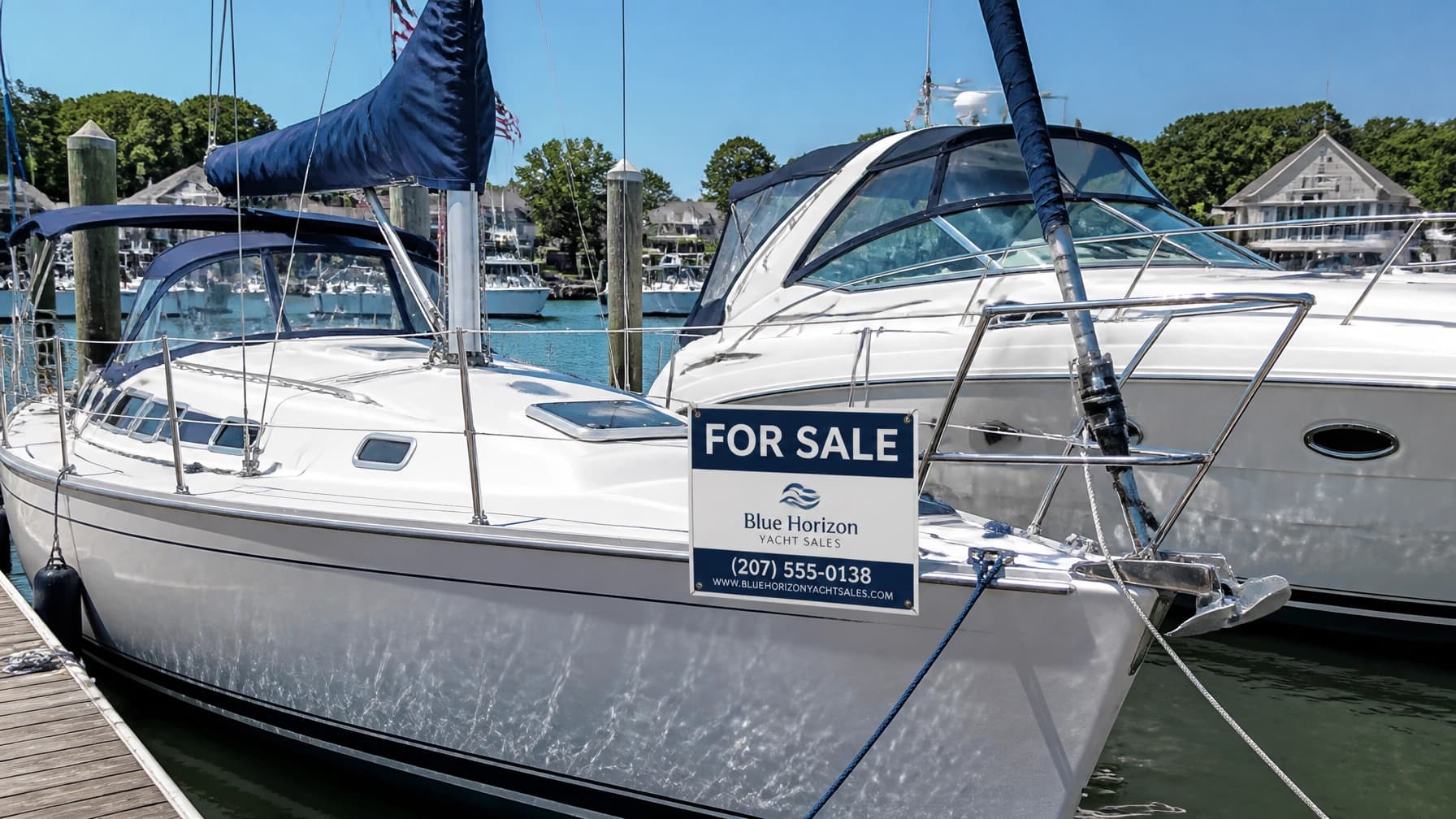
You have two ways to sell your boat: handle it privately, or list with a broker. A private sale saves you the commission but puts every task on you. A broker prices the boat, markets it, screens buyers, and manages escrow, survey logistics, and title transfer for a commission. Your choice comes down to time, price, and complexity.
Below, we compare both paths and answer the questions sellers ask most , how to price your boat, what paperwork you need, and how long a sale really takes.
Should I sell my boat myself or use a broker?
It depends on your boat and how much work you want to take on. Both paths can end in a good sale. They just split the effort and the cost very differently.
Sell privately and you keep the commission in your pocket. You also do all the jobs yourself. You price the boat, shoot the photos, write the listing, answer every call, run the showings, and manage the paperwork. For a small, simple, locally sold boat, that’s very doable. Many owners handle it well.
List with a broker and you trade a commission for a done-for-you sale. The broker prices the boat against real market data, markets it across the industry’s listing networks, screens buyers, and runs the closing. That includes escrow, survey coordination, and title transfer. For a larger, pricier, or more complex boat, that support usually pays for itself.
Here’s a quick side-by-side:
The commission buys more than convenience. A broker with market data often prices the boat better and negotiates harder. That can recover part or all of the fee. A good broker also keeps unqualified buyers off your dock, which saves you real time.
One more factor: reach. A private seller posts on a few sites and waits. A broker lists your boat on the industry’s shared networks, where serious buyers and other brokers actually look. More eyes usually means a faster, cleaner sale.
If you’d like to see how a brokerage handles a listing end to end, our Why List Your Yacht With Us page walks through the whole process.
How do I price my boat?
Price it on real sold data, not wishful thinking. This is where most private sellers slip.
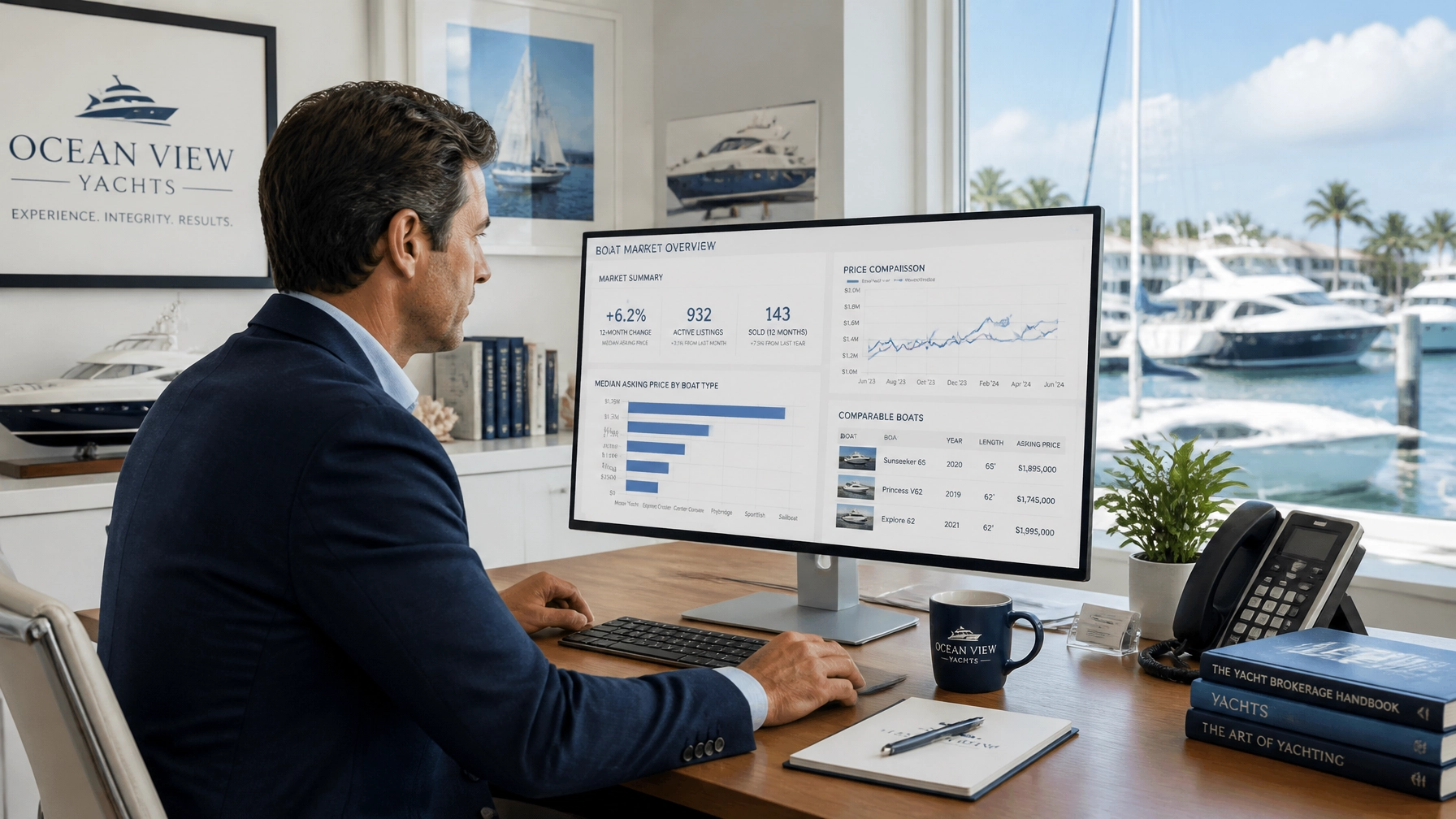
Start with what comparable boats have actually sold for. That’s a very different number from asking prices, which run high and often sit unsold. Look at the same make, model, and year, then adjust for condition, hours, upgrades, and location. Recent sales matter far more than stale listings.
A few pricing tips:
- Be honest about condition. Buyers discover the truth at survey anyway, so an inflated price just wastes everyone’s time.
- Factor in upgrades, but don’t overvalue them. New electronics or sails add value. They rarely return their full cost.
- Watch the season. Boats often sell faster and higher in spring and early summer.
- Price to sell, not to sit. A boat that lingers for months starts to look suspect to buyers.
Brokers price boats every day, and they see the sold numbers the public can’t. That’s a big reason sellers list with one. If you want a data-based number for your boat, a broker can run the comps for you.
What paperwork do I need to sell a boat?
You’ll need proof of ownership and a clean transfer. The exact documents depend on your state and the boat, but the core set is consistent.
Most sales need the following:
- The title, signed over to the buyer. In Texas, boat titles run through Texas Parks & Wildlife, not the DMV.
- A signed bill of sale that lists the price, date, boat description, and both parties.
- Current registration details for the transfer.
- A lien release, if you financed the boat. The buyer needs it free and clear.
- Coast Guard documentation paperwork, if your boat is federally documented rather than state titled.
Get any of it wrong and the sale can stall at closing. A missing lien release or an unsigned title is a common holdup. Brokers manage this paperwork daily, and they coordinate escrow so the money moves safely. Our step-by-step guide on how to buy a yacht privately covers the same documents from the buyer’s side, which helps you see the full picture.
How long does it take to sell a boat?
Anywhere from a few weeks to several months. The timeline swings with price, condition, demand, and how well you list.
A few things speed it up. A fair, data-based price draws offers faster. Clean photos and an honest, detailed listing build trust. Broad exposure on the right networks puts your boat in front of real buyers. And a boat that’s clean, serviced, and survey-ready closes quickly once an offer lands.
A few things slow it down. Overpricing is the biggest one. A weak listing, poor photos, an odd or dated boat, and a slow off-season market all stretch the timeline too.
Private sales can take longer, mostly because of limited reach. A broker’s networks and buyer lists often shorten the wait. Either way, price and presentation drive the clock more than anything else.
Why sellers work with Little Yacht Sales
Little Yacht Sales brings more than 150 years of combined brokerage experience to every listing. Our team includes CPYB-certified brokers , the Certified Professional Yacht Broker credential is the industry’s mark of training and ethics. We work from offices in Kemah and League City, Texas, and Key West, Florida, with access to the listing networks serious buyers use.

We price your boat on real market data, market it widely, screen the buyers, and manage the survey, escrow, and title transfer. You get a clean sale without the daily workload. See what past clients say on our Testimonials page.
Frequently asked questions
Should I sell my boat myself or use a broker?
Both work. Sell privately to save the commission if your boat is small, simple, and local. Use a broker for a larger, pricier, or more complex boat, or when you don’t have time to manage the sale yourself.
How much commission does a boat broker charge?
The standard rate is often around 10% of the sale price, paid by the seller at closing. In a co-brokered deal, the buyer’s and seller’s brokers usually split it.
How do I price my boat to sell?
Use recent sold prices for the same make, model, and year, then adjust for condition, hours, and upgrades. Asking prices are a poor guide, since many sit unsold.
What paperwork do I need to sell my boat?
At minimum, a signed title, a bill of sale, current registration, and a lien release if the boat is financed. Federally documented boats need their Coast Guard paperwork instead of a state title.
How long does it take to sell a boat?
Usually a few weeks to a few months. A fair price, strong photos, and broad exposure shorten it; overpricing lengthens it.
Can I sell my boat privately if it still has a loan?
Yes, but you must pay off the loan and deliver a lien release so the buyer gets a clean title. Escrow makes this safer, which is one reason sellers use a broker.
Talk to a broker
Thinking about selling your boat? Our CPYB brokers can price it, list it, and handle the paperwork from first call to closing. With 150+ years of combined experience and offices in Kemah, League City, and Key West, we help sellers close cleanly and confidently.
Ready to get started? Talk to a broker today.