
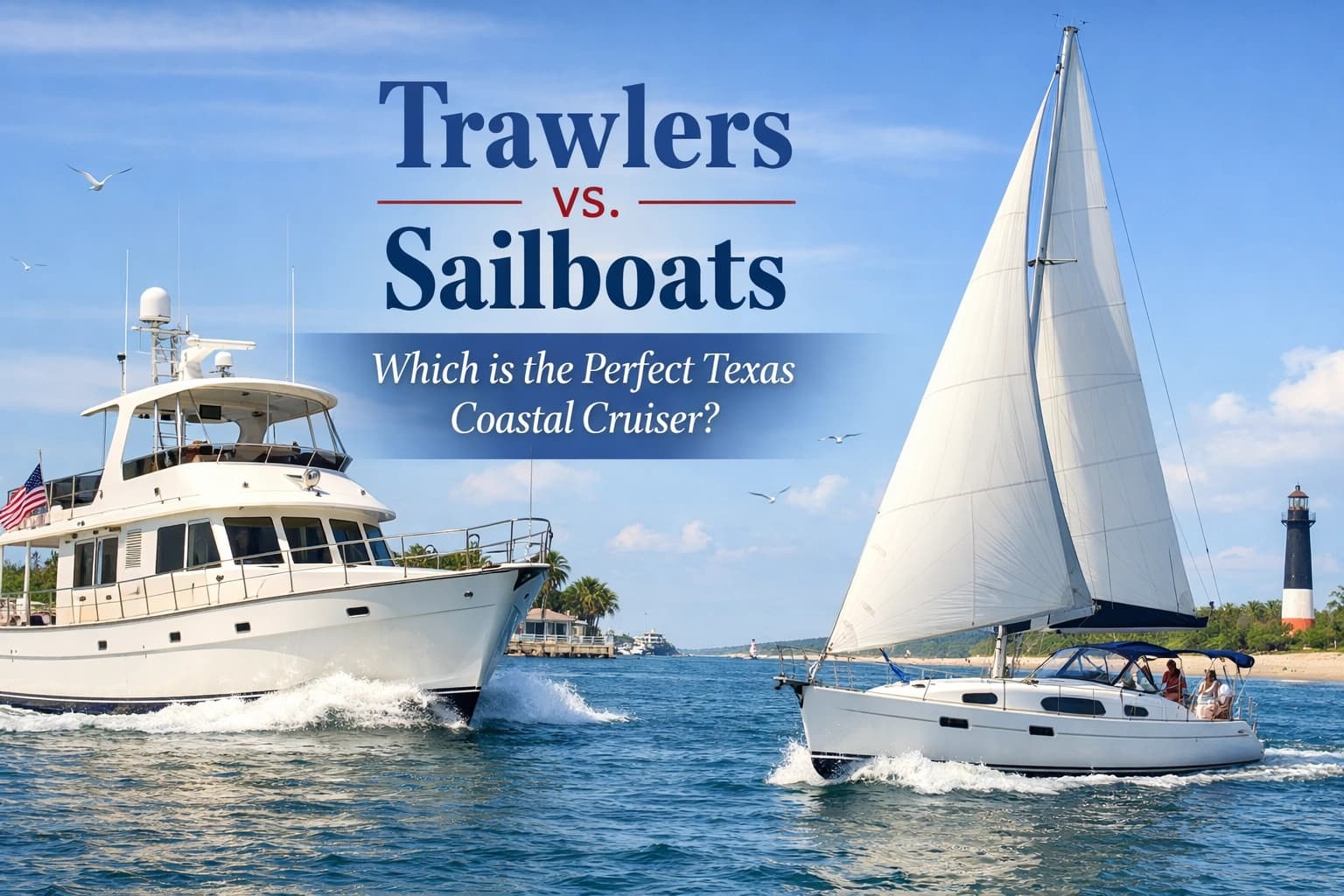
So you’re standing on the dock in Kemah, looking out at Galveston Bay, and you’re asking yourself the million-dollar question: trawler or sailboat? When it comes to Trawlers or Sailboats: Which is the Perfect Texas Coastal Cruiser, the choice isn’t straightforward. We get it. Our team has had this conversation about a thousand times over the years, and honestly, it never gets old because there’s no simple answer. But there IS a right answer for YOU, and that’s what we’re here to figure out.
The Great Texas Draft Debate
Let’s talk about the elephant in the bay, or rather, the keel under the boat. Like most of the Gulf Coast, Texas coastal waters are shallow. Like, REALLY shallow in spots. Clear Lake, Galveston Bay, the ICW (Intracoastal Waterway): these aren’t deep water playgrounds. We’re talking 6 to 10 feet in many cruising areas, and less if you wander off the marked channels.
Here’s where it gets interesting. Most cruising sailboats draw anywhere from 5 to 7 feet, sometimes more. That beautiful Swan 48 with the elegant lines? She’s pulling 6.5 feet, and you’re going to be white-knuckling it through some of our favorite anchorages. Meanwhile, many trawlers sit at 3 to 4 feet of draft. That’s a HUGE difference when you’re exploring.
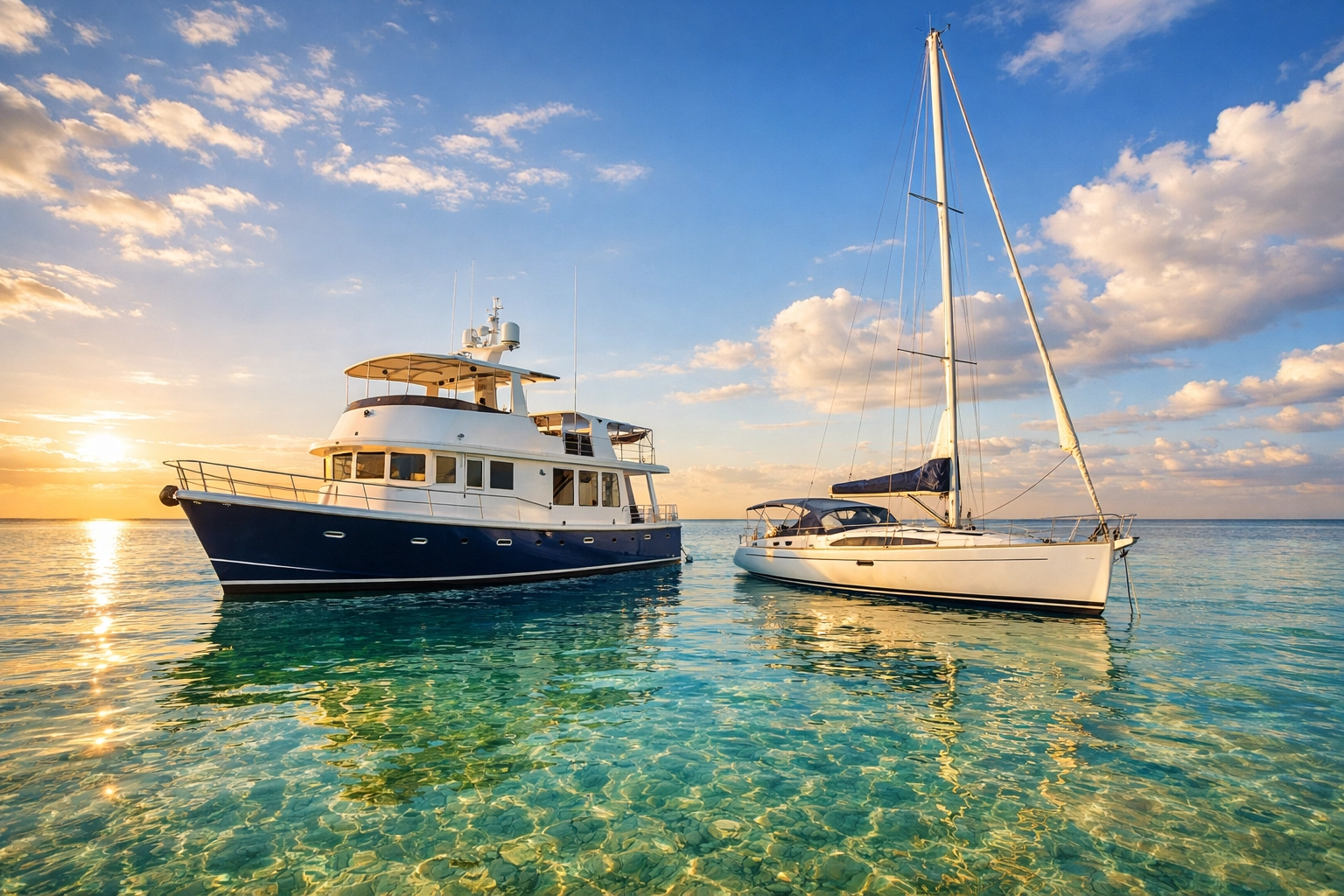
But: and this is important: not all trawlers are shallow draft angels. Some of the bigger displacement trawlers can draw 5 feet or more. So you can’t just say “trawler = shallow” and call it a day. We always look at the actual specs for the specific vessel. That’s where our 150+ years of combined experience at Little Yacht Sales comes in handy. We know which models work in Texas waters and which ones are going to have your eyeballs glued to the depth sounder.
Sailboats DO have options, though. Centerboard designs, swing keels, shoal draft models: we have sailboat listings that are absolutely designed for this environment. Island Packets, for example, often come in shoal draft versions that pull 4 feet or less. Game changer.
Wind vs. Fuel: The Reality Check
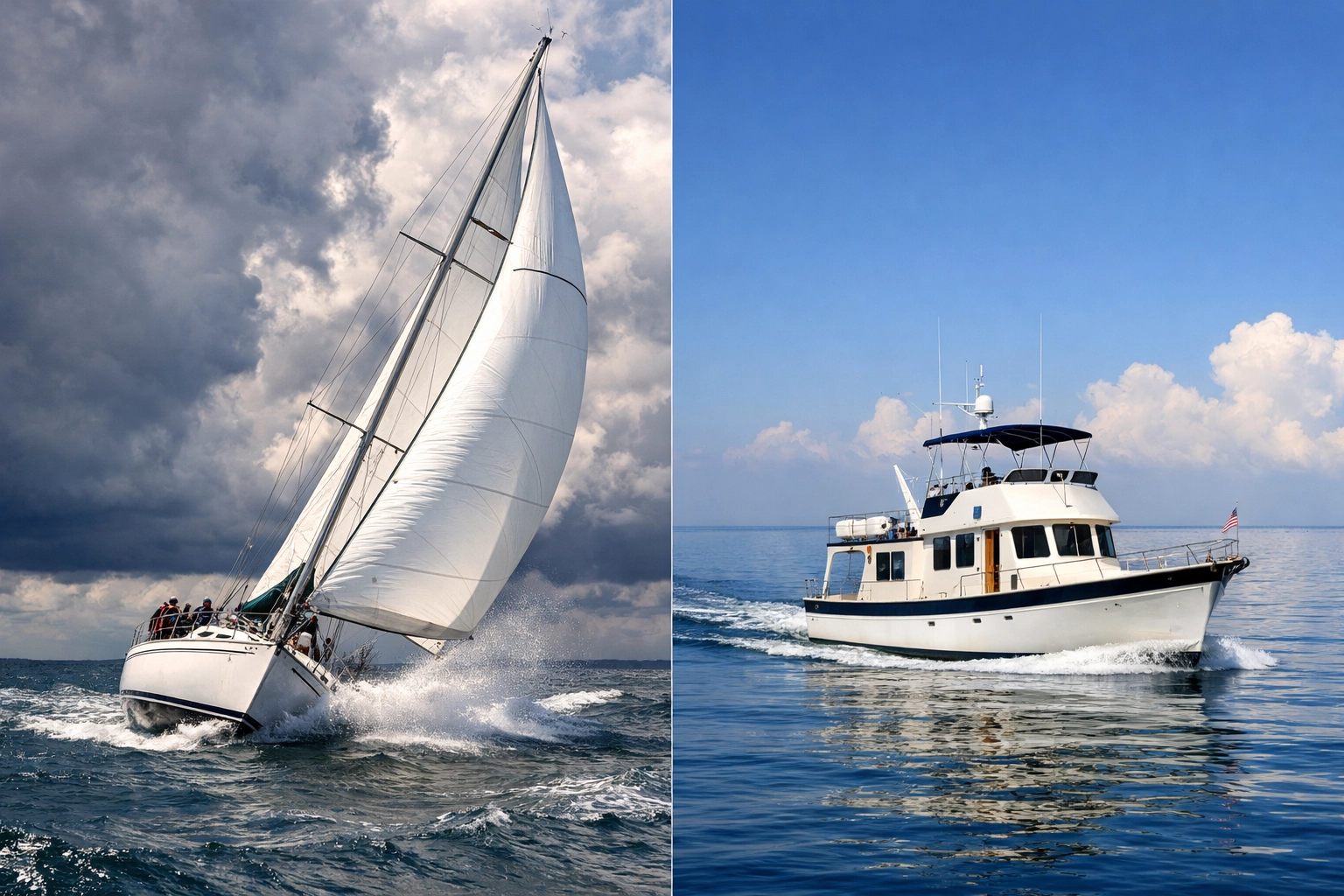
Here’s what nobody tells you about sailing on the Gulf Coast: the wind is somewhat bipolar. Spring and fall? Gorgeous. Consistent 10-15 knot breezes, perfect sailing weather. Summer? It’s either cooking hot with no wind, or you’re dealing with afternoon thunderstorms that pop up out of nowhere. Winter? Cold fronts bring 30-knot northerlies that make life interesting. The good news is, when its 95 degrees on shore, it’s usually about 10 degrees cooler out on the bay.
With a trawler, you don’t care. Engine on, throttle up, you’re making 7-8 knots regardless of what the wind’s doing. You’ve got a dinner reservation in Galveston at 7pm? You’ll be there. In a sailboat, you MIGHT be there, or you might be motoring the whole way burning diesel anyway.
But here’s the flip side: fuel costs. Trawlers can be thirsty. Depending on the model and how fast you run them, you’re looking at 3-8 gallons per hour. That adds up FAST. A weekend cruise from Clear Lake to Port Aransas and back? You could easily burn $300-400 in diesel. A sailboat making the same trip might use 20 gallons total, and half of that is charging batteries.
So it comes down to this: do you value predictability and schedule, or do you value the romance (and economy) of wind power? There’s no wrong answer, just different priorities.
The Comfort Factor
Let’s talk about living space, because if you’re serious about cruising: not just day-tripping: this matters A LOT.
Trawlers win on livability. We’re not even going to sugarcoat it. A 40-foot trawler has MORE usable space than a 45-foot sailboat. Why? No mast, no boom, no sails taking up locker space, no angled hull sides (sailboats get narrower as you go down), and a boxier, more efficient interior layout. You get a full-size galley, a proper salon, a master stateroom that actually feels like a bedroom, and deck space where you can set up chairs and actually relax.
Sailboats are, shall we say, more intimate. Everything’s built around the sailing rig. The mast comes through the salon. Storage is wherever you can find it. The “master” cabin is usually a V-berth up front that you crawl into. And if you’re heeling (leaning over while sailing), that coffee on the table is about to become coffee on the floor.
But: and this is a big but: sailboats have SOUL. There’s something about the way light filters through the hatches, the way the boat moves under sail, the quiet when the engine’s off and you’re just gliding. If you’ve experienced it, you know. If you haven’t, it’s hard to explain.
The Actual Cruising Experience
So what’s it really like to cruise Texas coastal waters in each type?
Trawler life: You wake up at anchor off Port Bolivar. Make coffee in your full-size coffee maker (because you have counter space). Check the weather: doesn’t really matter, you’re going anyway. Fire up the single diesel, weigh anchor, and point the bow toward your next destination. You’re running at 7 knots, covering ground steadily. The boat’s barely rolling thanks to stabilizers. You can walk around, make lunch underway, use the head without gymnastics. You’re burning fuel the whole time, but you KNOW exactly when you’ll arrive.
Sailboat life: Wake up in the same anchorage. Check the wind: it’s 12 knots from the southeast, perfect. Raise the main, unfurl the jib, kill the engine. Now you’re sailing at 5-6 knots and it’s absolutely magical. No engine noise, just wind and water. You’re trimming sails, adjusting course to optimize the wind angle, feeling connected to something ancient and true. But you’re also making slower progress, and if the wind dies, you’re motoring anyway.
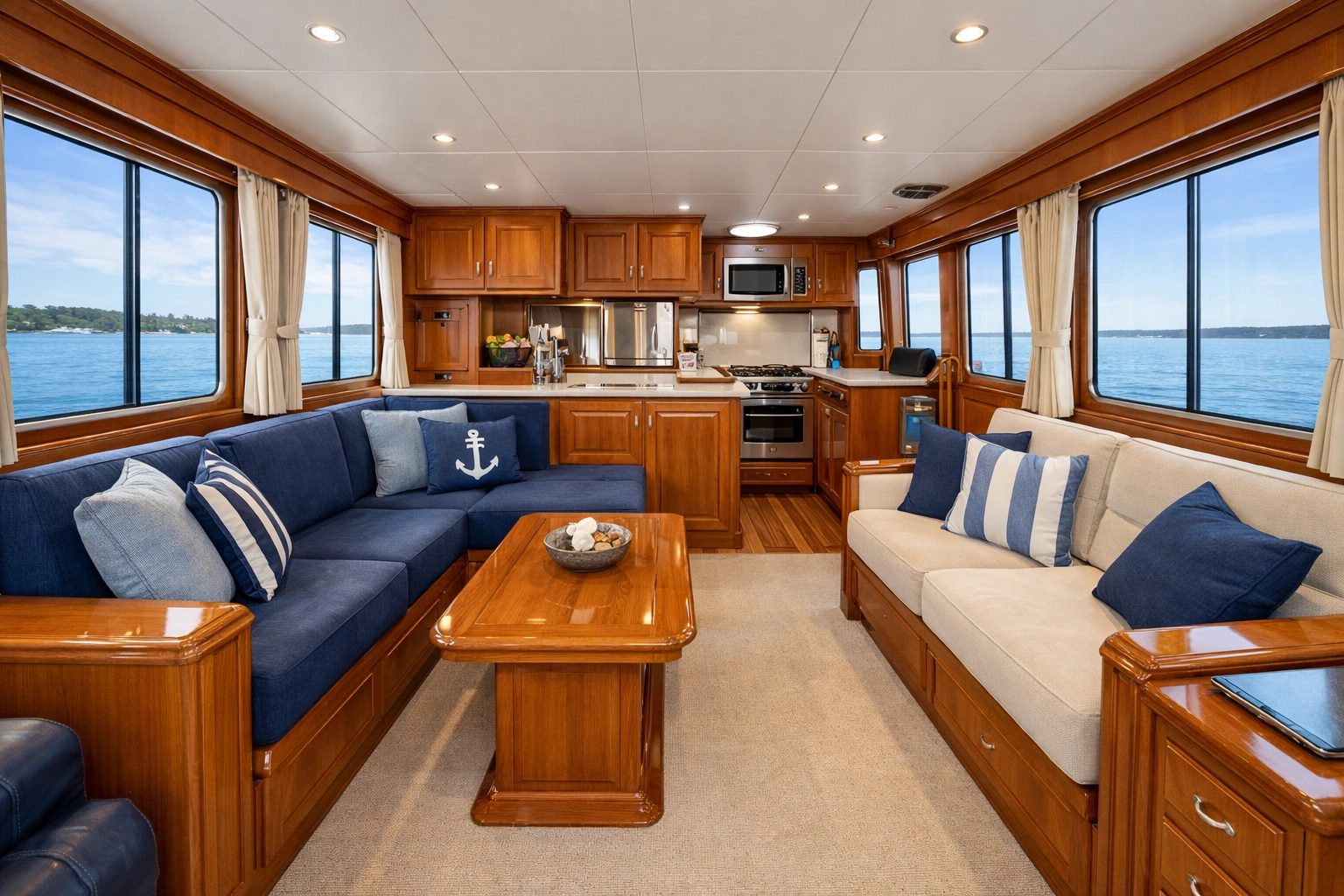
Both experiences are valid. Both are wonderful. They’re just different flavors of the same adventure.
The Money Talk
Let’s get real about costs because this matters when you’re boat shopping.
Initial purchase price? Depends more on age, condition, and brand than type. You can find sailboats and trawlers at every price point from $50,000 to $500,000+.
Operating costs? Trawlers cost more to run (fuel) but often less to maintain (no rigging, no sails to replace every 10 years). Sailboats are cheaper to operate but when that standing rigging needs replacement, that’s $10,000-25,000 right there.
Insurance? Similar, though some insurers charge a bit more for sailboats due to the complexity. Both benefit from the fact that they are relatively slow. Insurance underwriters like slow.
The real difference is in your usage pattern. If you cruise every weekend, fuel costs add up on a trawler. If you cruise twice a month, it’s manageable.
So Which One’s Right for You?
After helping hundreds of people make this exact decision, here’s what we’ve learned:
Go with a trawler if:
- You want predictable, comfortable cruising on YOUR schedule
- You value interior space and livability above all else
- You’re planning to do a lot of cruising and don’t want to deal with weather delays
- You’re okay with higher fuel costs in exchange for convenience
- The idea of managing sails and rigging sounds like work, not fun.
Go with a sailboat if:
- You want the pure experience of wind-powered travel
- You don’t mind (or actually enjoy) the physical engagement of sailing
- You want lower operating costs and don’t mind slower passages
- You’re drawn to the tradition and romance of sailing
- You’re willing to work around weather and wind conditions
Here’s what our team actually recommends: Come down to our office in Kemah. Seriously. We’ve got over 150 years of combined experience helping folks on the Gulf Coast figure this out. We can walk the docks with you, get you on some boats, talk through your actual plans (not your dream plans, your ACTUAL plans), and help you make a decision you won’t regret.
The right boat: whether it’s a yacht for sale in Houston or anywhere else: is the one that matches your cruising style, your budget, and your actual life.
Want to talk through your specific situation? That’s literally what we do all day, and we’re pretty good at it. Give us a shout at Little Yacht Sales and let’s figure out your perfect Texas coastal cruiser.
Fair winds (or smooth seas, depending on which way you go),
The Team at Little Yacht Sales