
There is something special about waking up on the boat, coffee in hand, and watching the mist roll off the water in Galveston Bay. Most people think of our local waters as a hub for shipping or a place to catch some trout, but those of us who spend our lives on the deck know better. Galveston Bay is a living, breathing ecosystem that is just teeming with life. If you know where to look (and how to look), a simple afternoon cruise can turn into a full-on National Geographic special.
We often talk to clients who are looking for that perfect “adventure vehicle,” and while we love a good high-performance sail, some of our favorite days are the slow ones. We are talking about the days spent idling near the marsh or drifting in the ship channel just to see what pops its head up. So, if you’re ready to trade the roar of the engines for the sound of a blowhole or a distant bird call, this guide is for you. Let’s dive into the world of Galveston Bay wildlife watching.
The Socialites of the Ship Channel: Dolphin Spotting
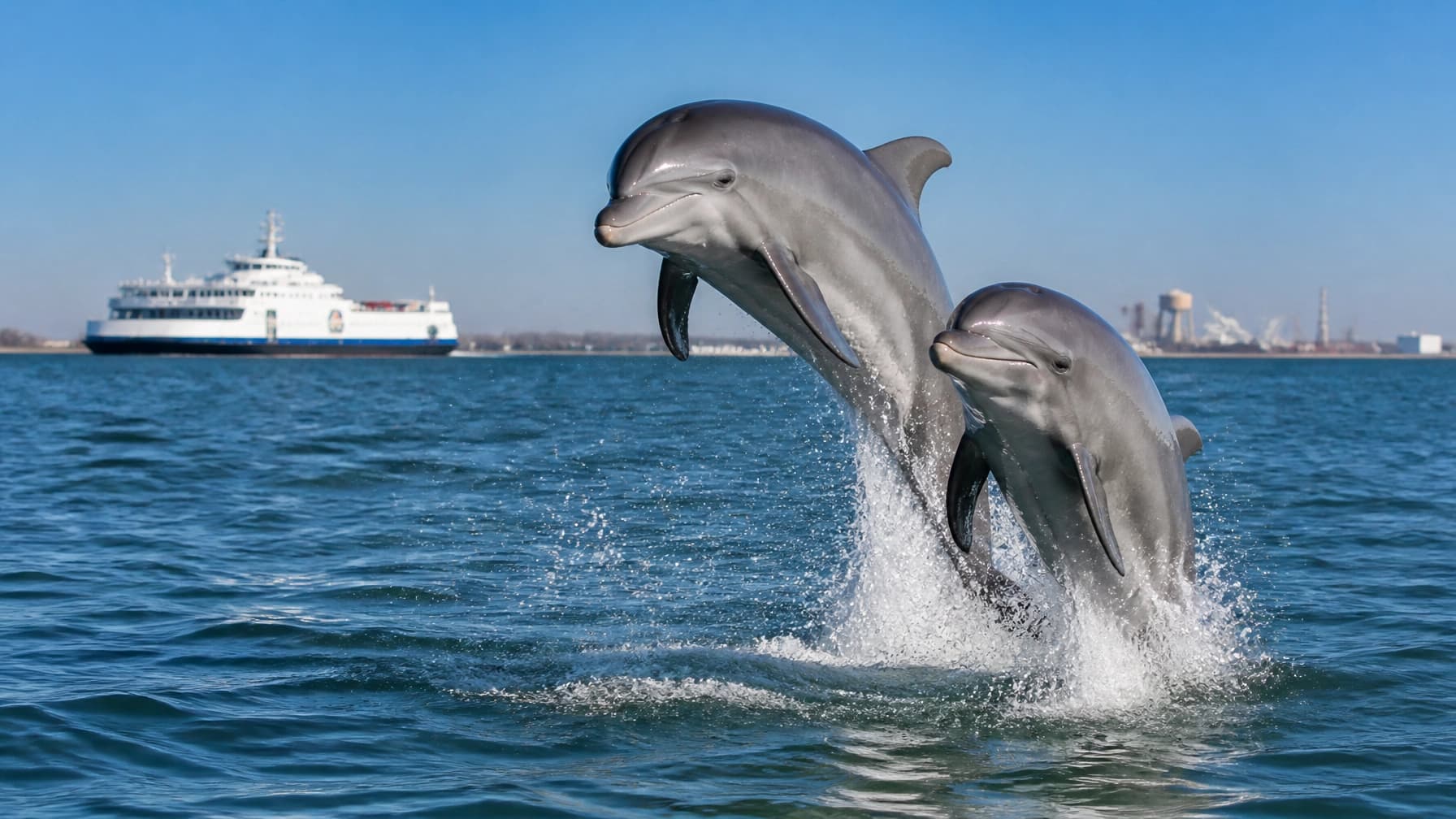
If there is one thing that never gets old, it’s seeing a pod of Atlantic bottlenose dolphins. These guys are the undisputed rockstars of the Texas coast. Our team at Little Yacht Sales has seen them hundreds of times, and honestly, we still point and shout every single time one breaks the surface. It’s just pure magic.
For the best dolphin spotting in Galveston Bay, you really want to head toward the Galveston-Port Bolivar ferry route or the Galveston Ship Channel. Dolphins love these areas because the ferry and the big ships stir up the water, which makes it much easier for them to hunt for baitfish. (It’s basically a free buffet for them.) We also recommend checking out Seawolf Park. The current there can be quite strong, and dolphins often hang out in the eddies waiting for a snack.
Now, if you want to be a “pro” observer, try to get out there in the early morning or late afternoon. On calm days, the water looks like a mirror, and you can see their dorsal fins from a mile away. If you want to dive deeper into the science, the folks at the Galveston Bay Dolphin Research Program do incredible work tracking individual dolphins in our bay. They can even tell you which dolphins are “locals” and which ones are just passing through!
Just a quick tip from your friendly brokers: please stay at least 50 yards away. We love these animals, and we want to keep them safe. Chasing them is a big no-no (and technically illegal), so just kill the engine or idle along a parallel course. They might even decide to come over and play in your wake if you’re lucky!
A Bird-Watcher’s Paradise: From Spoonbills to Egrets
You don’t have to be a “birder” to appreciate the incredible variety of winged locals we have here. Texas Gulf Coast birding is some of the best in the country, especially during the spring and fall migrations. But the real secret? The best seats in the house are only accessible by boat.
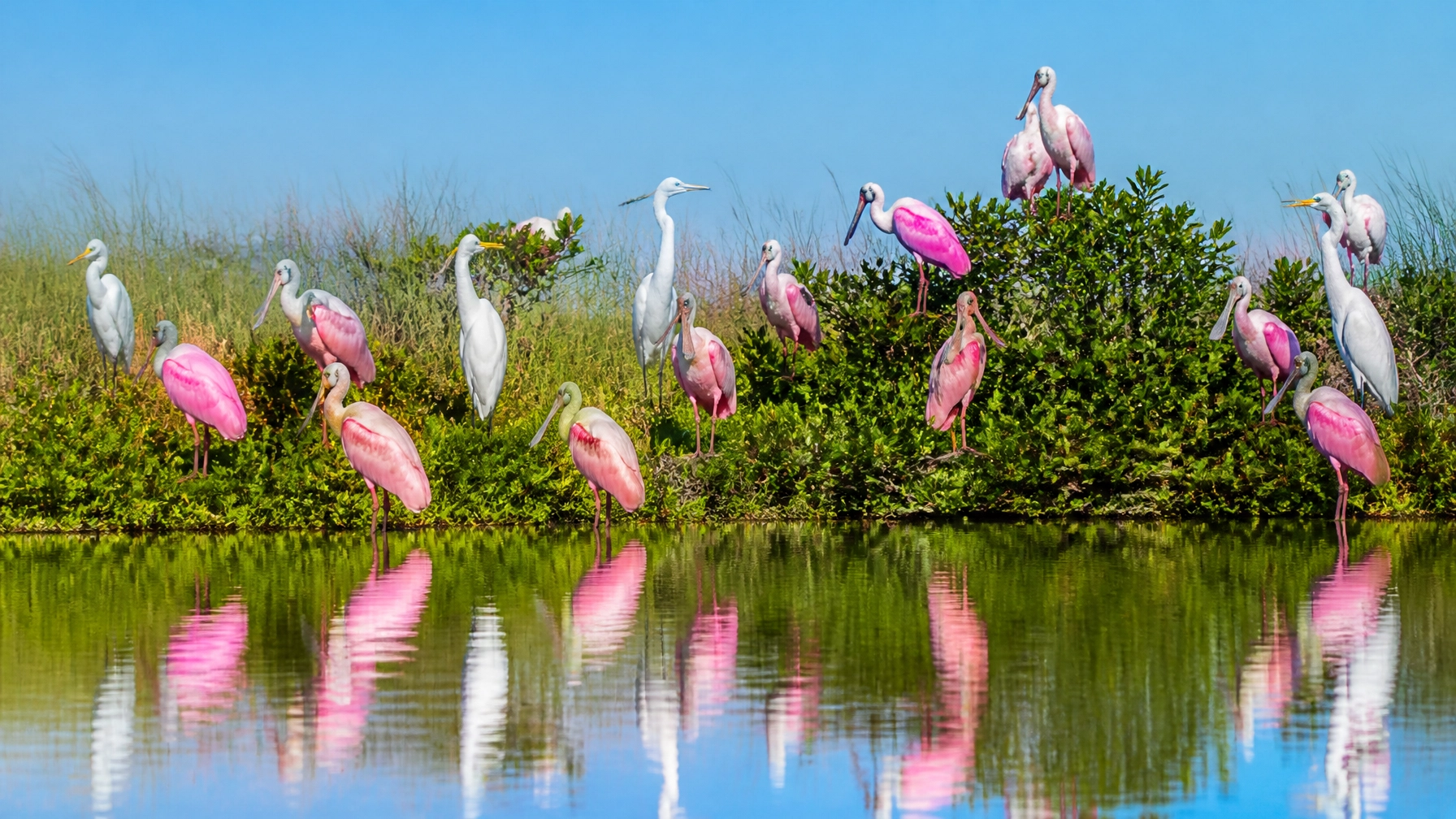
If you have never seen a Roseate Spoonbill in person, you are missing out. They are bright pink, I mean, really pink, and they look like something out of a tropical fever dream. One of the best places to see them is North Deer Island. This is a boat-only rookery, and it is a massive nesting ground for pelicans, egrets, and spoonbills.
Since it’s an island, you can pull up nearby and watch the chaos of thousands of birds coming and going. It’s loud, it’s busy, and it’s absolutely fascinating. We always suggest bringing a good pair of binoculars. You can stay far enough away to not disturb the nests while still seeing every little detail of the chicks. If you really get into it, you should definitely check out FeatherFest, which is a huge birding event every year.
For a quieter experience, we love taking the boat into Christmas Bay or near the paddling trails of Galveston Island State Park. The water is shallow, so you’ll need a boat with a light draft (or a kayak), but you’ll see herons and stilts standing like statues in the grass. It’s a great way to find some peace and quiet. As we always say, Why Families That Boat Together Stay Together often comes down to these quiet, shared moments of discovery.
The Rare and the Remarkable: Sea Turtles and Beyond
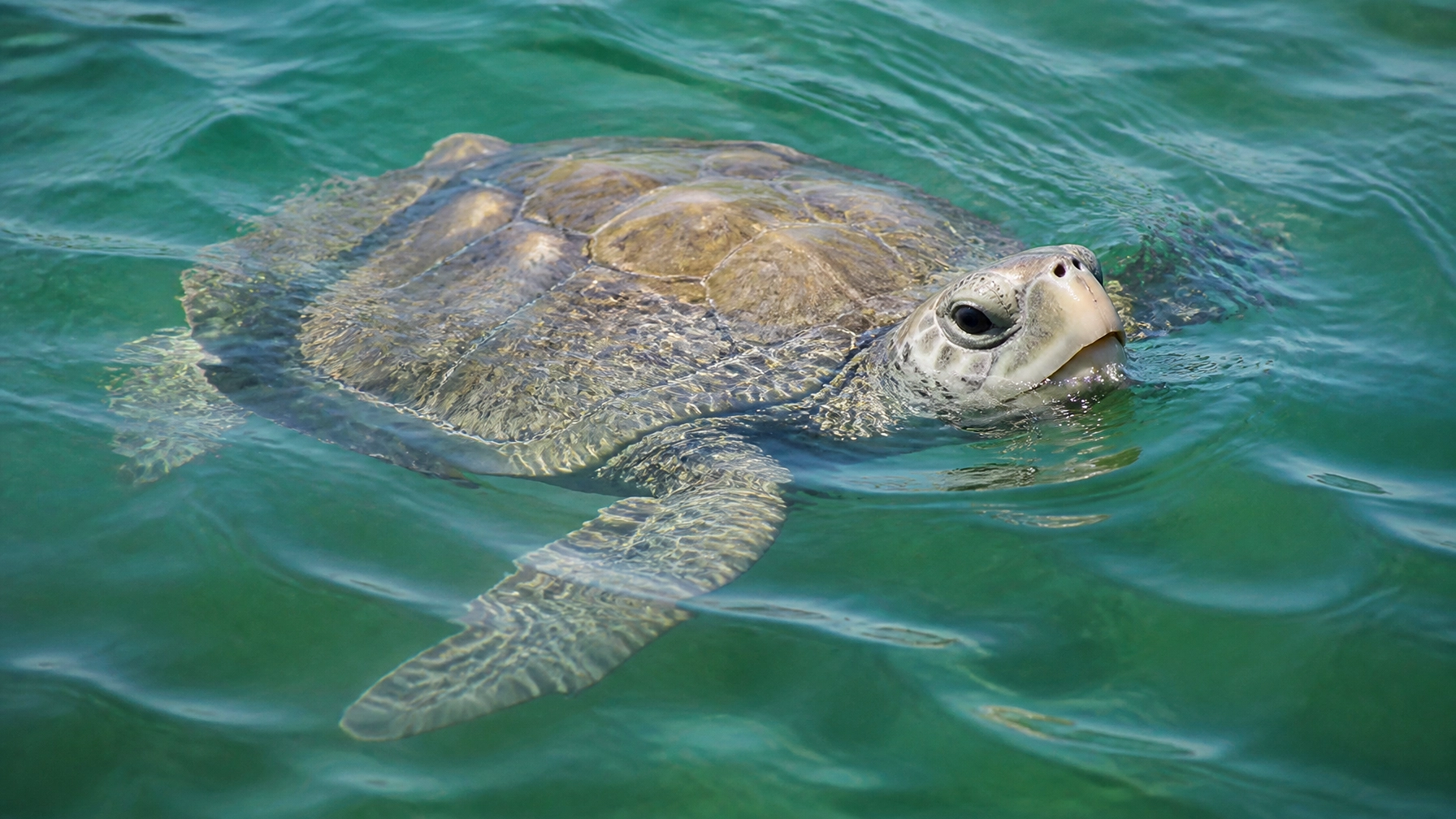
While dolphins and birds are the most common sights, keep your eyes peeled for the “unicorns” of Galveston Bay sea life. We are talking about the Kemp’s ridley sea turtle. These are the smallest and most endangered sea turtles in the world, and they actually nest right here on our beaches.
Spotting one from a boat is a bit of a challenge, but it’s totally possible. Your best bet is near San Luis Pass or in the nearshore Gulf waters. They pop their heads up for a breath of air, just a quick “boop” on the surface, before diving back down to forage. It’s a real “blink and you’ll miss it” moment. If you’re lucky enough to see one, take a mental picture (or a real one if you’re fast enough) and give them plenty of space.
Of course, not all Gulf Coast marine life is quite so cuddly. We’ve all seen the jellyfish, or “stinging nettles” as some call them, drifting by. While they can be a pain for swimmers, they are actually quite beautiful to watch from the safety of the gunwale. Just don’t go poking them!
On a more serious note, our bay is a delicate ecosystem. If you ever come across a stranded dolphin, turtle, or manatee (yes, they occasionally visit!), please don’t try to help it yourself. Call the Texas Marine Mammal Stranding Network at 1-800-962-6625. They are the experts, and they have the gear to handle these situations safely.
Planning Your Wildlife Run: Tips for the Water
So, you’re ready to go boating wildlife Texas style? Here is a quick checklist for your next adventure. First, check the tides. A lot of the best birding spots are in very shallow water, and the last thing you want is to become part of the scenery because you’re stuck on a sandbar!
We also recommend planning a route that hits a few different habitats. You might start in the ship channel for dolphins, then swing by the Texas City Dike for some pelicans, and finish up at a marsh edge for some shorebirds. If you need some inspiration for routes, check out our post on 5 Texas Boating Adventures for some of our favorite local cruises.
Lastly, don’t forget the human elements. Sunscreen is a must (that Texas sun is no joke), plenty of water, and maybe a field guide to help identify what you’re seeing. Visit Galveston has some great resources on local marine life if you want to brush up before you head out.
Why We Love It
At the end of the day, this is why we do what we do. Boating isn’t just about getting from point A to point B; it’s about the things you see along the way. Whether you are on a sleek sailboat or a sturdy trawler, the water offers a perspective you just can’t get from the shore.
Getting away from the hustle and bustle of the city and seeing a pod of dolphins playing in your wake is, quite frankly, The Simple Trick to Improve Your Work-Life Balance. It resets your brain and reminds you of the beauty right here in our own backyard.
So, next time you’re out on the bay, slow down. Put the binoculars to your eyes. Look for the splash, the pink wing, or the little head popping up for air. We promise you, this Galveston Bay nature guide is just the beginning of what you can discover. We’ll see you out there on the water!