
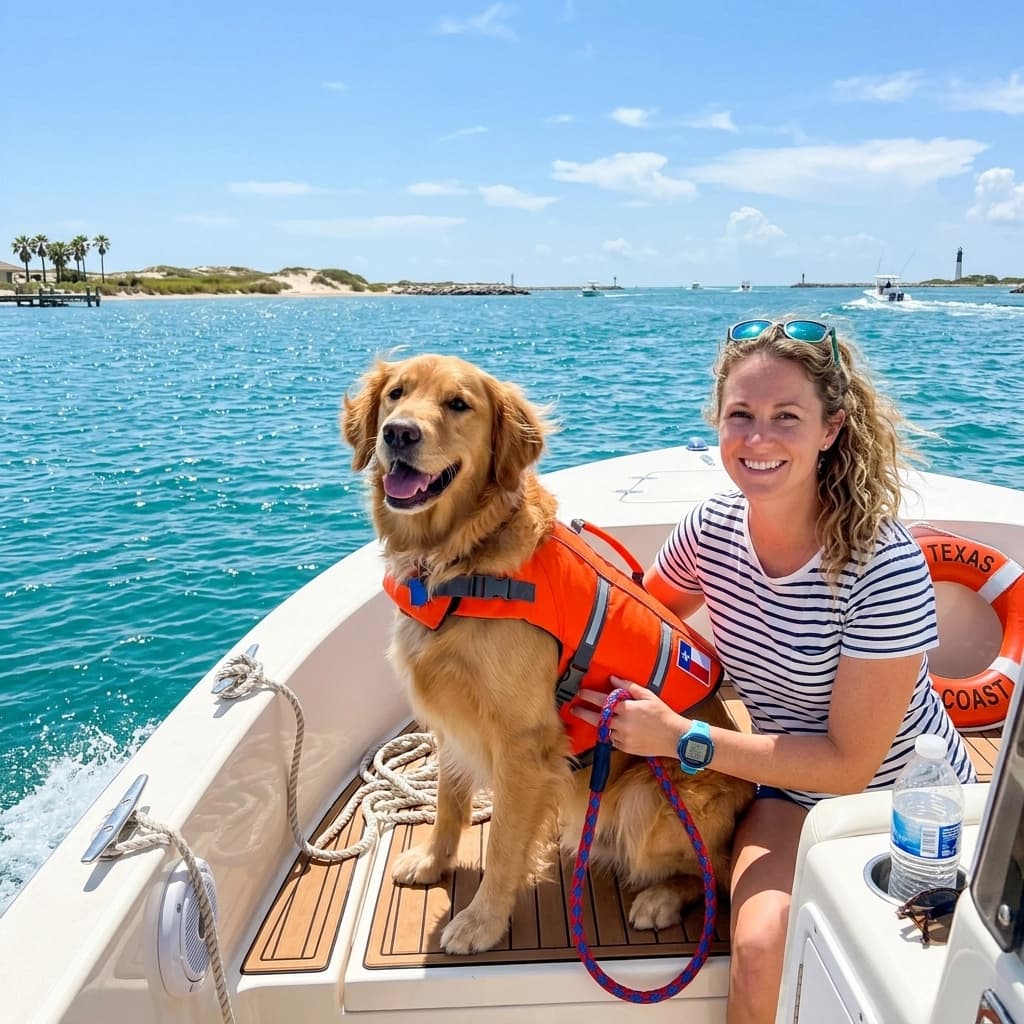
For a lot of us here along the Texas Gulf Coast, our boats aren’t just a weekend hobby: they’re basically an extension of our living rooms that just happens to float. And if you’re anything like the team here at Little Yacht Sales, your “family” almost certainly includes a dog (or two). We see it all the time on the docks in Kemah: a beautiful yacht pulling out with a happy retriever standing proud at the bow. It’s the dream, right?
But here’s the thing: and I’ve seen this go both ways: bringing a dog aboard can either be the best decision you ever made or a total disaster. Properly prepared, dogs adapt remarkably well to life on the water. Some of them actually become better crew members than most humans I know! But if you don’t do the legwork, the introduction of a pup to a boat can be incredibly stressful for the dog, frustrating for you, and honestly, a bit unsafe for everyone involved.
So, I wanted to put together a guide that really looks at the reality of being a dog owner on a boat, specifically with our unique “Texas-sized” challenges in mind.
Acclimation: It All Starts at the Dock
You wouldn’t take a toddler out on a deep-sea fishing trip for their first time out, and you shouldn’t do that with your dog either. Before any actual cruising happens, your dog needs to be 100% comfortable with the vessel while it’s just sitting at the dock.
This is a process that usually takes a few visits over a week or two. Think about it from the dog’s perspective: the boat is moving (even just a little), the smells are totally foreign, the engine makes a weird vibration, and the surfaces are way different than the carpet at home. It’s a HUGE novelty. They need time to sniff every corner, investigate the cockpit, and: most importantly: find their “safe spot.”
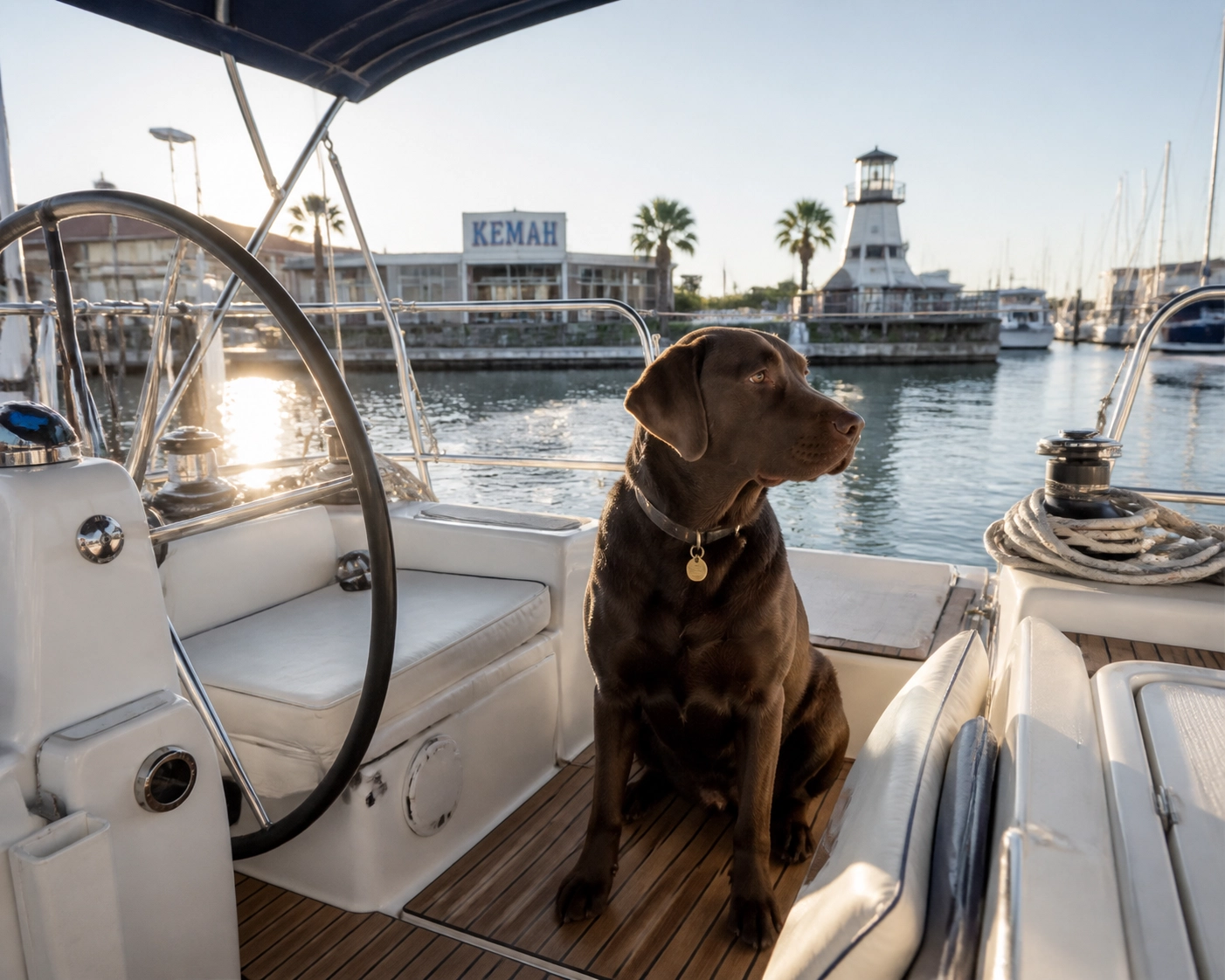
Once they’ve found a preferred resting spot and aren’t acting skittish, then you can try a “mini-voyage.” I’m talking twenty or thirty minutes of just motoring in calm conditions. Give them plenty of reassurance and keep them in a safe, secure spot. The folks we work with who take it slow: progressing from dockside hangs to short motor-abouts to full-on cruises: consistently have better luck than the ones who try a full weekend trip on the dog’s first day. It’s all about building that confidence!
The Gear: Safety is Non-Negotiable
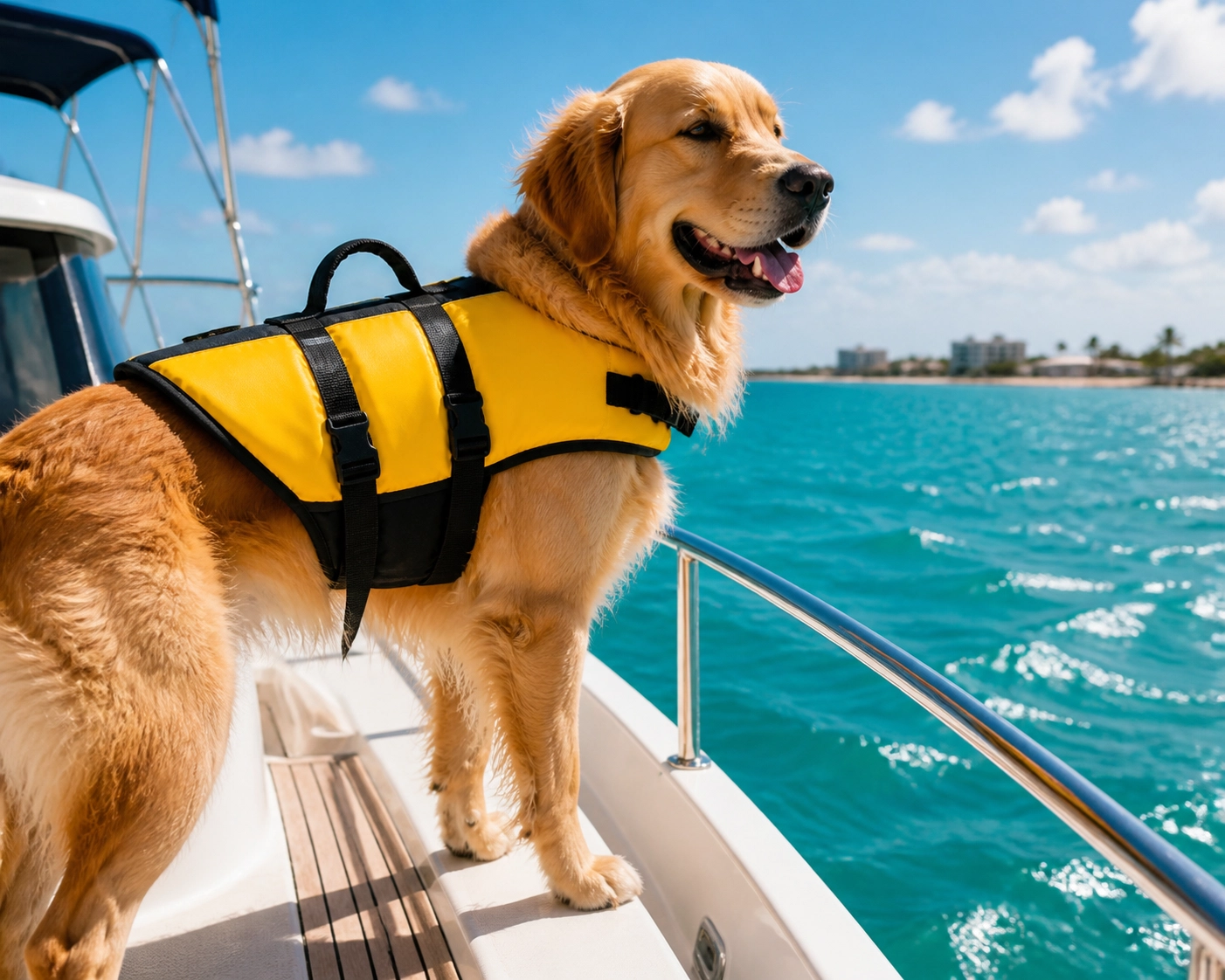
I’m going to be straight with you: a canine personal flotation device (PFD) is essential. It is NOT optional. I don’t care if you have a Labrador that can swim for miles; even the best swimmers can get disoriented in open water. If they fall over while you’re at cruising speed, or if they get caught in a strong current, things can go south very quickly.
A properly fitted marine PFD does two things. First, it provides flotation (obviously). But second, and maybe even more importantly, it usually has a sturdy lifting handle on the back. If your 70-pound dog falls into the water, trying to haul them back over the gunwale or onto a swim platform is incredibly difficult without a handle. That handle allows a single crew member to get them back on board safely.
And while we’re talking safety, make sure their collar has current contact info. Ideally, they should be microchipped and registered to your mobile number. I also recommend using a short tether or leash in the cockpit during transit. And let’s talk about those slippery decks! Wet fiberglass and varnished teak are like ice for dog paws. We always suggest putting down some non-skid mats or rubber-backed runners in high-traffic areas. Falls on a moving boat are totally avoidable if you just give them some traction.
Heat Management: The Texas Imperative
If you live in Texas, you know we aren’t just talking about “warm” weather. We’re talking about that thick, heavy, 90-degree-plus heat with 70% humidity that makes you feel like you’re breathing through a warm towel. For a dog, this is the single biggest risk on the boat.
Dogs can’t sweat like we do. They rely on panting and external cooling to keep their body temp down. On a sun-exposed deck in the middle of July, a dog can go from “having fun” to “heat stroke” in a matter of minutes. It is a HUGE deal.
Effective heat management means you need a multi-pronged approach:
- Shade is Mandatory: A bimini top that covers the cockpit is the bare minimum. If you’re at anchor, you might even want to rig up some portable sun shades.
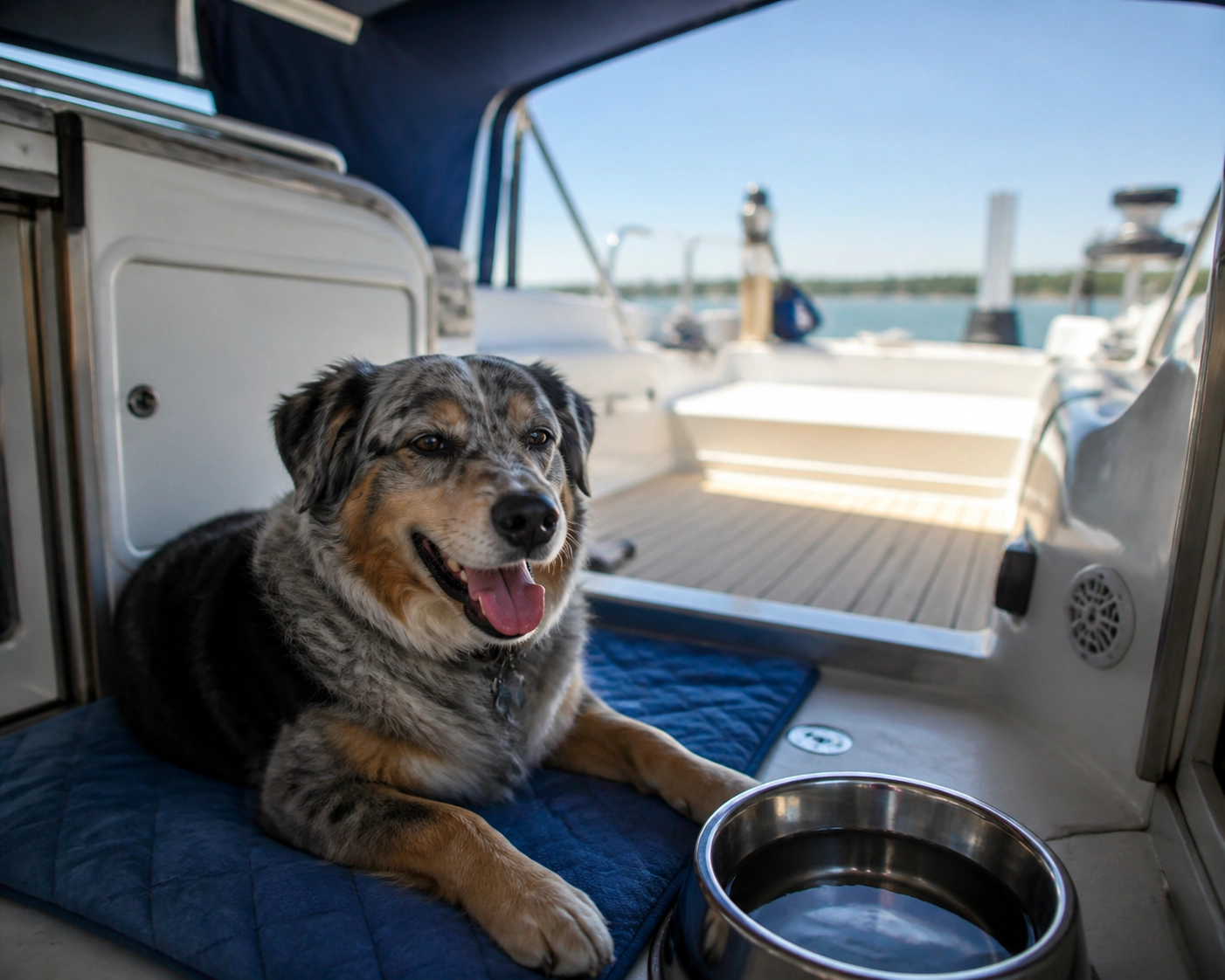
- Hydration: Fresh water needs to be available at all times in a non-spill bowl. You have to actively offer it to them, too, because they might get distracted by all the sights and sounds.
- The 5-Second Rule: This is a big one. Fiberglass and teak decks in the direct Texas sun can easily top 130 degrees. That is hot enough to burn paw pads in seconds. Check the deck with the back of your hand: if you can’t hold it there for five seconds, it’s too hot for your dog. Keep them on shaded mats or consider some doggy booties if you have to cross a hot deck.
If you see heavy panting, thick saliva, or your dog looking a bit unsteady, STOP. Get them in the shade, wet down their belly and paws with cool water, and if they don’t perk up immediately, it’s time to head back. Heat stroke is no joke and can be fatal.
The “Potty” Situation
This is the question everyone asks but no one wants to talk about. Where does the dog go? You really want to have this figured out before you’re five miles offshore.
Most dogs can be trained to use a designated mat: usually a piece of artificial turf in a tray: placed on the foredeck or a swim platform. It takes a little patience (and maybe some “attractant” spray), but most dogs get the hang of it in a few weeks. If that’s not for you, you’ll have to plan your cruises around regular shore stops. This limits your range a bit, but for day cruising or short overnighters, it’s perfectly doable. Just don’t wing it. Your dog will be miserable if they’re holding it in for ten hours, and your boat’s interior will thank you for having a plan.
Boat Features That Make a Difference
If you’re currently shopping for a boat and you know your dog is going to be your primary companion, there are some features you should definitely look for. It’s one of the things we love helping people with at Little Yacht Sales.
A big one is a swim platform with a low, stable boarding step. This makes getting in and out of the water so much easier for the pup. If you have a larger vessel, look for transom doors or boarding ladders that are “dog-friendly.”
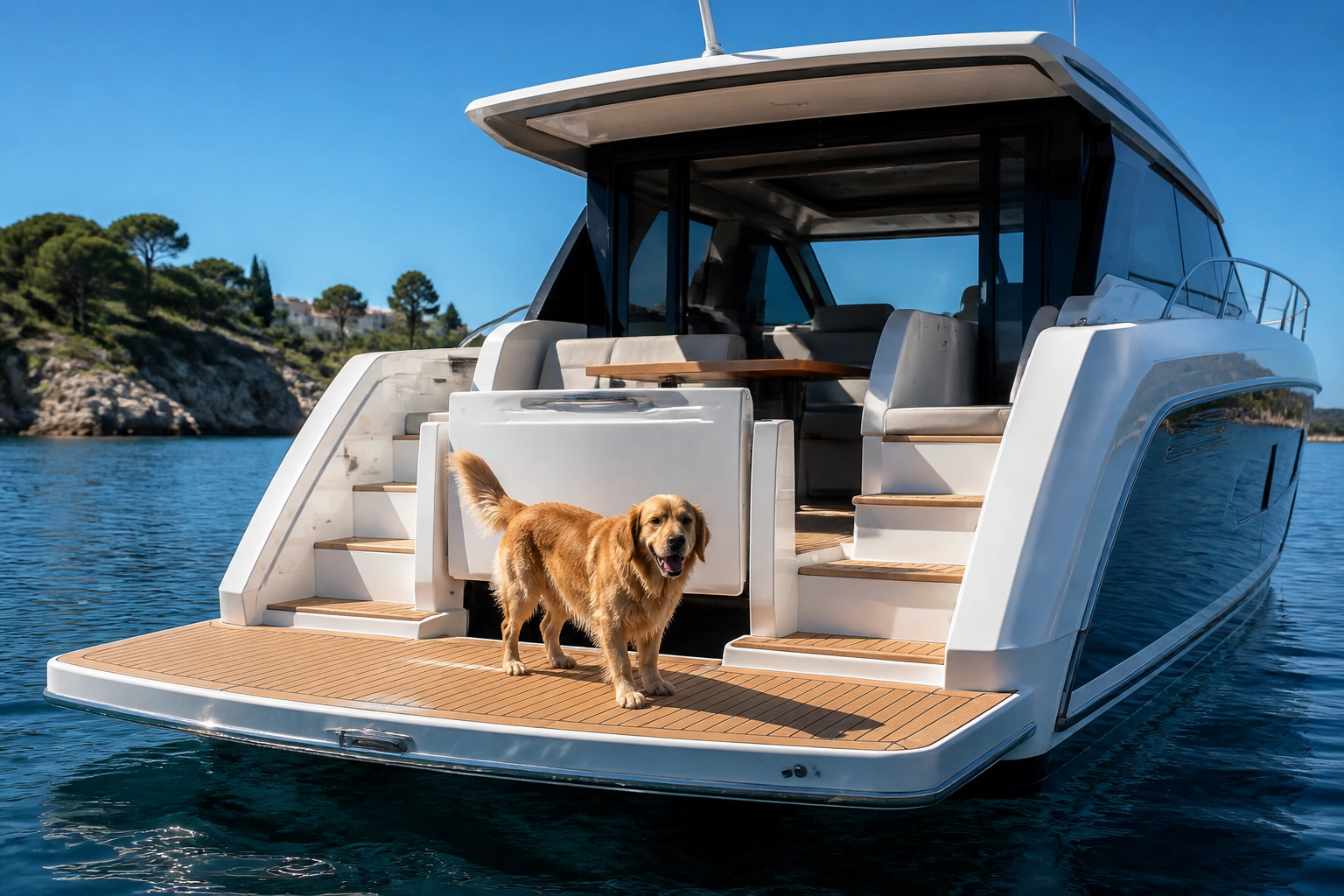
Deck layout is another big factor. You want relatively flat, unobstructed side decks. If a boat has steep cabin sides or narrow passages with a ton of hardware in the way, it’s going to be a struggle for a dog to navigate. Also, think about the interior. You want a sole (floor) that can handle water, sand, and the occasional “oopsie” without being ruined. High-quality synthetic teak or durable non-skid are great options here.
Final Thoughts from the Docks
At the end of the day, having a dog on board is one of the most rewarding parts of the cruising lifestyle. They have this amazing way of settling everyone into the rhythm of the water. When the dog is relaxed and happy, the whole crew seems to follow suit.
We’ve helped so many families find the perfect vessel for their lifestyle: furry members included. Whether you’re looking at a sleek sailboat or a sturdy power cat, we can help you figure out which models have the best layouts for your specific needs.
If you’re thinking about an upgrade or you’re a first-time buyer trying to see how a 75-pound Golden Retriever is going to fit into the equation, come see us! Our brokers are always down for a consultation at our Kemah office or right out on the docks. You can even check out some of our current listings at littleyachtsales.com/yacht-details/ to start getting some ideas.
See you on the water (and bring the pup)!