
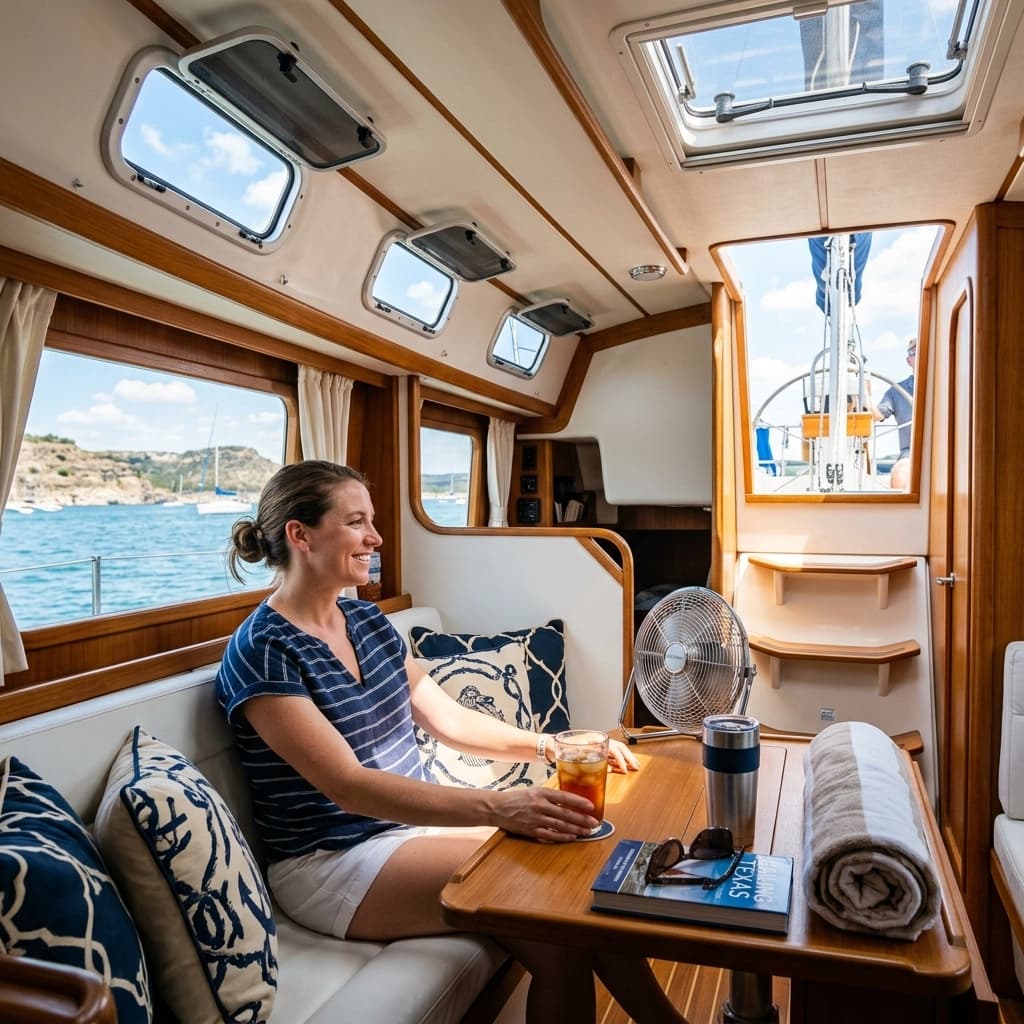
For boat owners along the Texas Gulf Coast, the difference between a vessel that gets used all summer and one that sits idle from June through September is rarely a matter of motivation. More often, it comes down to whether the boat has been properly equipped for the realities of the regional climate. Heat indices regularly exceed 100 degrees in the Kemah and Galveston Bay area, humidity routinely tops 80 percent, and the afternoon breeze that makes spring sailing so pleasant frequently fades by mid-afternoon.
The good news: a relatively small number of targeted upgrades can transform an uncomfortable boat into one that is genuinely livable in peak summer conditions. The following five areas account for the majority of the comfort gains experienced cruisers report after summer-proofing their vessels.
Right-Sizing the Air Conditioning
The most common climate-control issue on the Texas coast is undersized air conditioning, and it is rarely the fault of a previous owner. Production boats are typically specified with HVAC capacity calibrated to the average North American boating climate, which is significantly milder than the upper Gulf Coast. A unit that performs adequately in Annapolis or Newport will often run continuously without reaching setpoint in Kemah during a July afternoon.
Owners experiencing this issue have several options. The most effective is to step up in capacity at the next replacement cycle, ideally working with a marine HVAC technician familiar with regional conditions. On larger vessels, adding a second zone — typically forward — distributes load and provides redundancy. At minimum, annual service of the existing system, including raw water strainer cleaning, condenser coil inspection, and refrigerant verification, should occur before the heat sets in rather than after a failure.
Reducing Solar Heat Gain
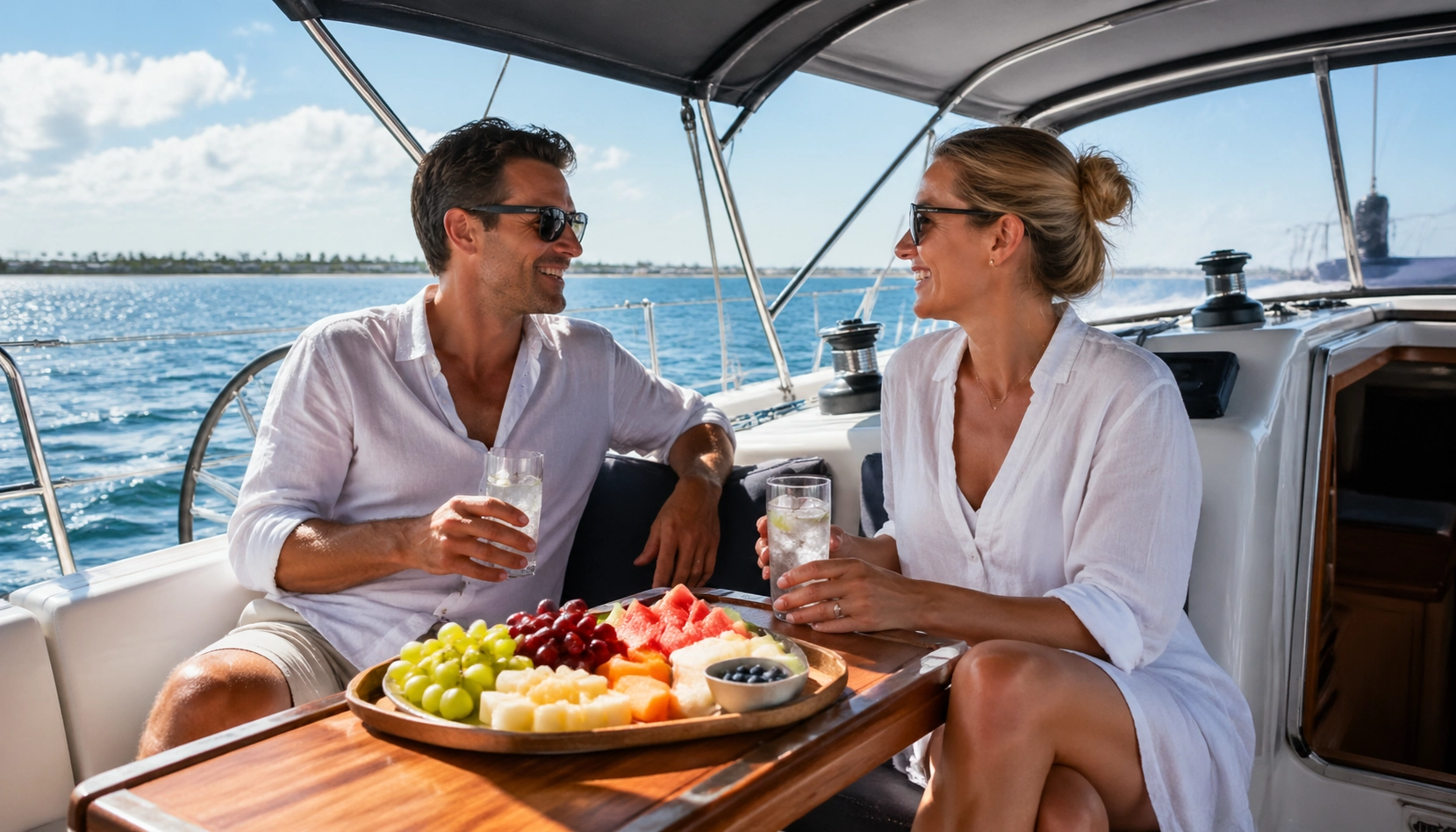
Every square foot of cabin surface exposed to direct sunlight represents a thermal load the air conditioning must overcome. Reducing solar gain through shade and reflective coverings yields cabin temperature reductions of ten to fifteen degrees on calm afternoons, and proportionally reduces HVAC runtime and energy consumption.
Three measures deliver outsized returns. Full bimini coverage, extending forward of the helm and supplemented with side curtains for late-afternoon western sun, addresses the cockpit. Reflective hatch covers — fitted, mylar-faced shades sized to each overhead opening — are among the highest-value upgrades available, often costing under fifty dollars per hatch and producing measurable interior temperature reductions within thirty minutes of deployment. Finally, a traditional awning rigged between the boom and a forward stay provides shade across the cabin top while at anchor, where solar gain is otherwise unmitigated.
Maximizing Ventilation
Air conditioning addresses temperature; ventilation addresses livability. The two work together, and a boat with strong passive and active ventilation will be comfortable in conditions where an air-conditioned but poorly ventilated boat is not.
Dorade vents represent the most effective passive ventilation solution available to recreational vessels. They operate continuously, draw no power, and move air whether the boat is occupied or not. Vessels that have had dorades removed or sealed during refits should consider restoring them.
Twelve-volt cabin fans, particularly those mounted over berths and primary seating areas, do not reduce ambient temperature but produce significant comfort improvements through evaporative cooling at the skin. Marine-grade fans from established manufacturers draw minimal current and can run on house batteries throughout an overnight stay without meaningful impact on capacity.
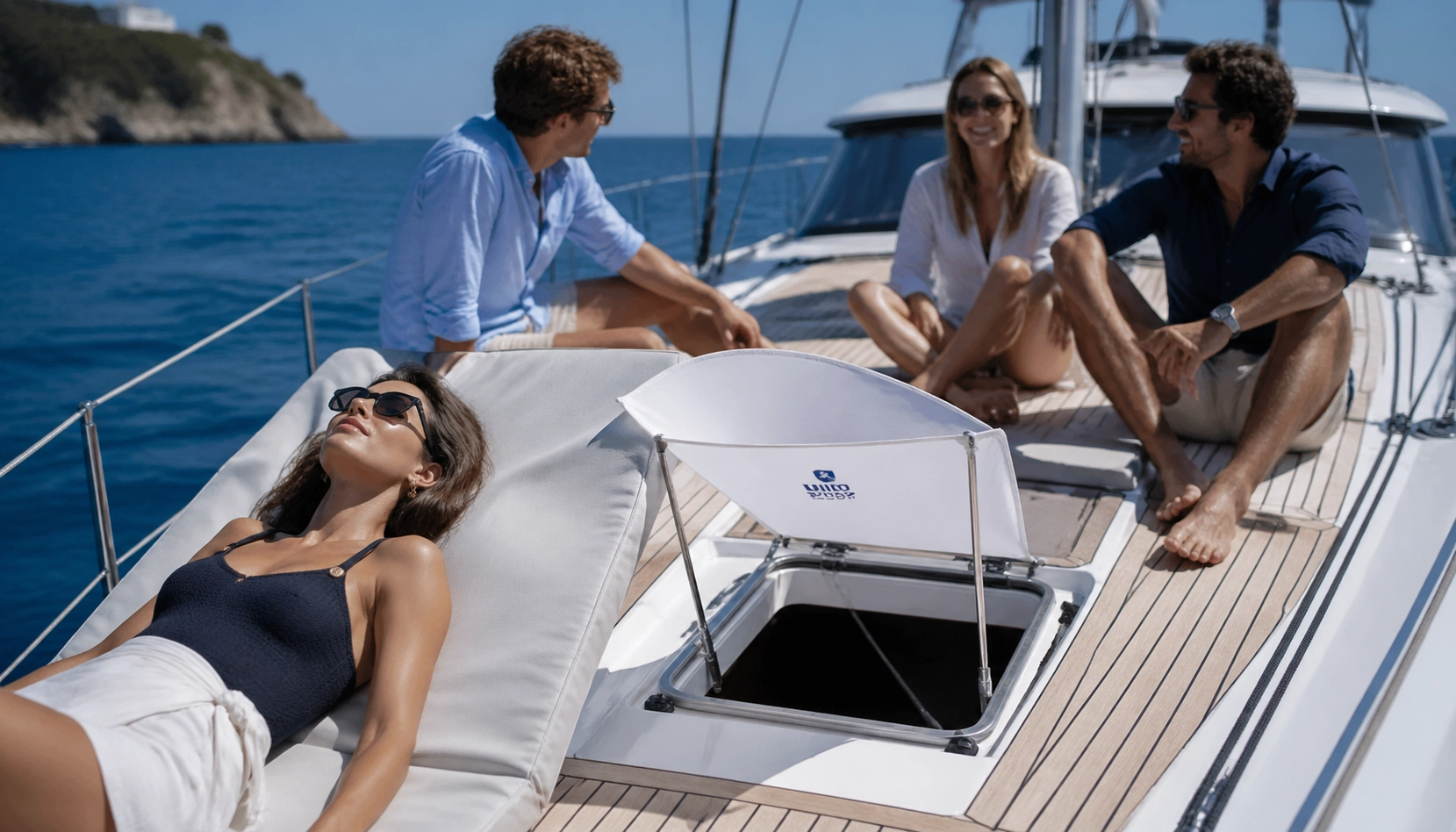
Wind scoops fitted to forward hatches at anchor convert even modest breezes into directed cabin airflow, often eliminating the need for active cooling overnight in moderate conditions. They stow compactly and represent one of the lowest-cost, highest-impact additions an owner can make.
Anchoring Strategy
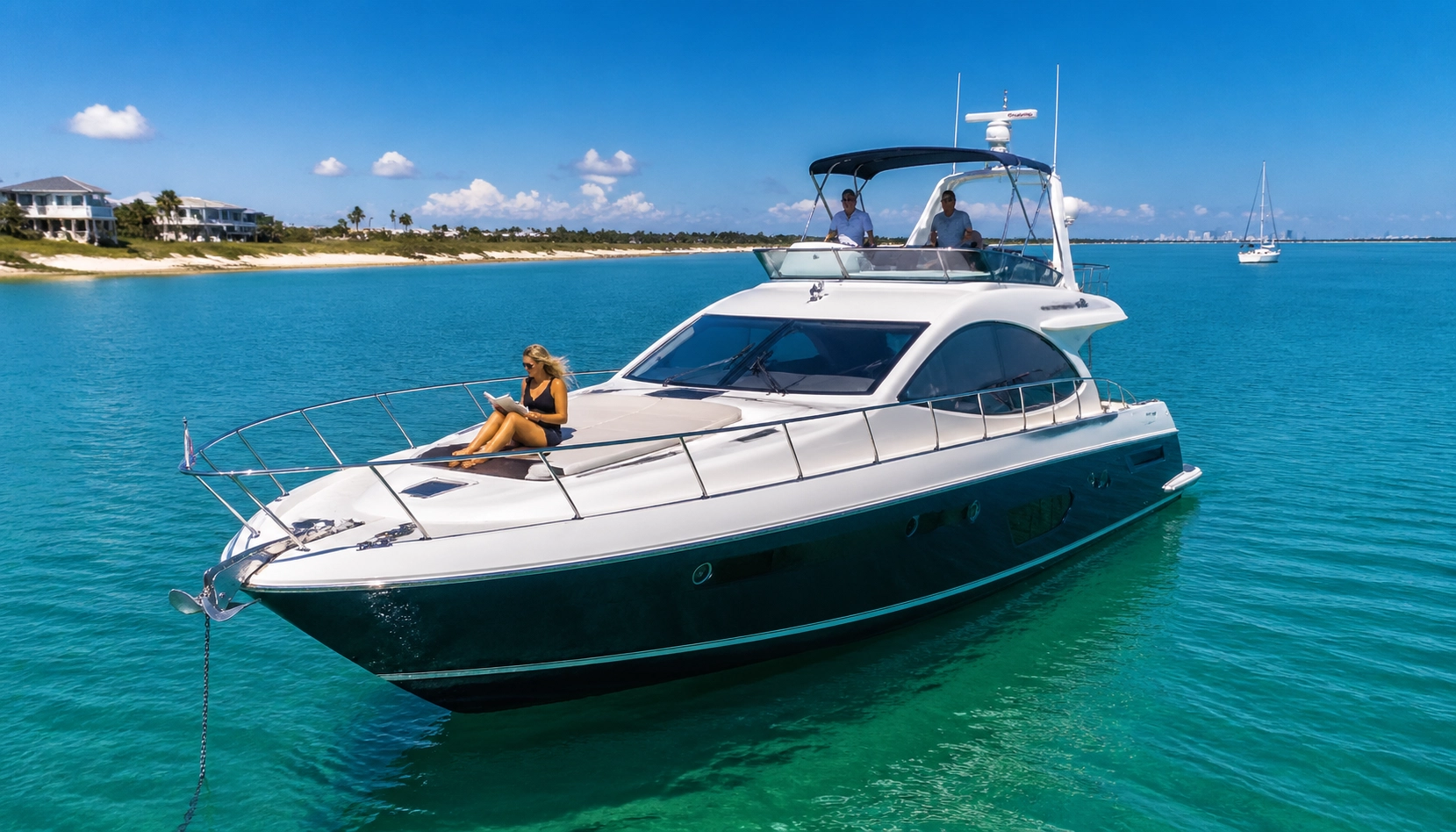
Once a vessel is at anchor, its orientation relative to the prevailing breeze becomes the dominant factor in cabin comfort. A boat lying with the wind forward of the beam, with the forward hatch open, will channel air through the cabin throughout the evening. The same boat anchored with the breeze on the stern quarter will retain heat regardless of how many fans are running.
The Texas Gulf Coast benefits from a reliable southeasterly summer breeze, which simplifies anchoring decisions. Owners who develop the habit of orienting the boat to take advantage of this prevailing pattern report substantially better overnight comfort with no equipment investment whatsoever.
Insect screens for the companionway and forward hatches are a related necessity. The mosquito and no-see-um populations of the upper Texas coast are aggressive enough that any ventilation strategy requiring open hatches must include effective screening.
Refrigeration and Galley Considerations
Two often-overlooked systems materially affect the experience of a boat in hot weather. Refrigeration efficiency degrades sharply when icebox seals fail, and original gaskets on boats more than ten or fifteen years old are frequently compressed, hardened, or cracked. Replacement is straightforward and dramatically reduces compressor runtime and battery drain.
For owners still relying on ice-only cooling, modern marine refrigeration has reached a point of efficiency where conversion is increasingly justifiable on energy and convenience grounds alone. Twelve-volt compressor systems paired with adequate house battery capacity — particularly with the lower internal resistance and deeper discharge tolerance of lithium chemistries — make full-time refrigeration viable on vessels where it previously was not.
A Broader Consideration
The cumulative effect of these upgrades is significant. Owners who summer-proof their vessels report substantially higher seasonal usage, better resale outcomes, and a more positive overall ownership experience. Boats that were previously used three or four weekends per summer become genuine year-round assets.
In some cases, however, the honest assessment is that a particular vessel is not a candidate for cost-effective summer-proofing. Older boats with limited electrical capacity, inadequate insulation, or layouts that resist effective ventilation may require investment disproportionate to the resulting comfort gains. For owners in that situation, a conversation with an experienced broker about the current market — both for selling the existing boat and for identifying a more suitable replacement — is often the more productive path.
Little Yacht Sales has been working with Texas Gulf Coast owners for decades, and our team’s collective experience with regional boating conditions informs both our brokerage practice and the guidance we provide to current and prospective owners. Whether the right answer is a targeted upgrade or a change of vessel, we are available to help work through the analysis.
For a consultation, contact our Kemah office or visit us at the docks.